
Skip to content
Thirstier News November 5, 2026
Home
Thirstier News
  • ABC Live
  • Al Jazeera
  • CBS Live
  • Contact
  • France 24
  • Live News
  • NBC Live
Popular Tags
  • YouTube
  • U.S. News
  • World News
  • MS NOW
  • PBS NewsHour
  • Al Jazeera English
  • DW News
Science & Space — NASA — News, Missions & Technology

What Is the Nancy Grace Roman Space Telescope? (Grades 5-8)

Published August 11, 2026 · 6 min read
· By Thirstier News

6 min read

What Is the Nancy Grace Roman Space Telescope? (Grades 5-8)

NASA STEM Team

Aug 11, 2026
Article

Contents

  • When and Where Will the Nancy Grace Roman Space Telescope Launch?
  • Where Will the Nancy Grace Roman Space Telescope Go in Space?
  • What Instruments Does the Nancy Grace Roman Space Telescope Have?
  • What Will Scientists Study With the Nancy Grace Roman Space Telescope?
  • Who Was Nancy Grace Roman?
  • Career Corner
  • More About the Nancy Grace Roman Space Telescope

This article is for students grades 5-8.

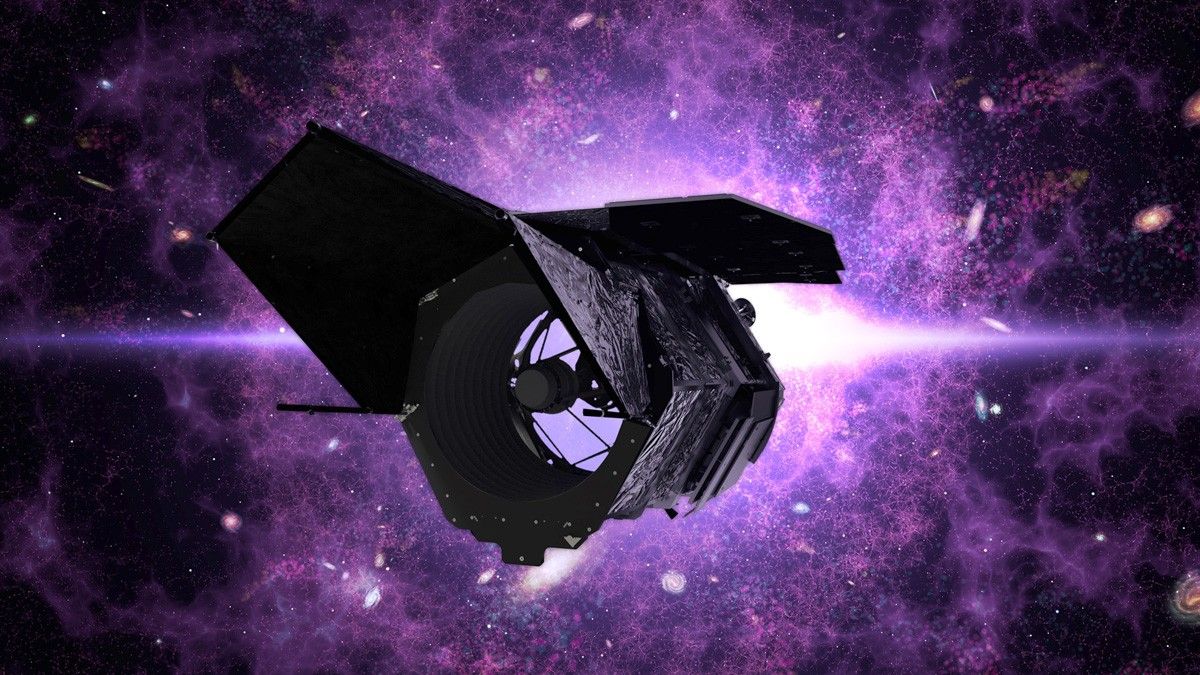
The Nancy Grace Roman Space Telescope is NASA’s newest astrophysics observatory. The telescope will scan large sections of space. Roman will help astronomers answer questions about dark energy, dark matter, exoplanets, and more.

The Nancy Grace Roman Space Telescope is NASA’s newest space telescope that will study dark energy, exoplanets, and astrophysics.
NASA’s Goddard Space Flight Center

______________________________________________________________________

Words to Know

Astrophysics: a branch of space science that applies physics and mathematics to study the universe.

Lagrange point: a position in space where the gravitational forces of a two-body system, such as the Sun and Earth, are balanced. This point creates an “orbital parking spot” where minimal fuel is needed to maintain a spacecraft’s position.

Infrared light: light that is completely invisible to the human eye but can be felt as heat. It’s the area on the electromagnetic spectrum where wavelengths are longer than visible red light, but shorter than microwaves.

Dark energy: the mysterious force that is causing the universe to expand at an accelerated rate.

Exoplanet: a planet outside of our solar system.

Dark matter: the mysterious gravitational “glue” that holds cosmic structures together.

______________________________________________________________________

When and Where Will the Nancy Grace Roman Space Telescope Launch?

The Nancy Grace Roman Space Telescope is scheduled to launch Aug. 30, 2026. It will launch aboard a SpaceX Falcon Heavy rocket. Liftoff will take place from Launch Complex 39A at NASA’s Kennedy Space Center in Florida.

Where Will the Nancy Grace Roman Space Telescope Go in Space?

The Nancy Grace Roman Space Telescope will orbit about 930,000 miles (1.5 million kilometers) away from Earth. It will orbit around a special place in space called the second Sun-Earth Lagrange point, or L2. This gravitational sweet spot is perfect for unobstructed views of the universe.

What Instruments Does the Nancy Grace Roman Space Telescope Have?

The Nancy Grace Roman Space Telescope will peer through dust and across vast stretches of space using infrared light. Roman’s primary mirror is 7.9 feet (2.4 meters) across. The large surface of the telescope mirror gathers lots of light. More light equals finer details.

The primary mirror will send light to Roman’s two science instruments: the Wide Field Instrument and the Coronagraph Instrument.

The Wide Field Instrument is a 300-megapixel infrared camera. It allows scientists to look very far back in time because the light captured by the camera has been traveling for billions of years before reaching the instrument. Seeing the universe in its early stages will help unravel how it has expanded throughout its history. This will give scientists hints about how the universe may continue to evolve.

The Coronagraph Instrument uses technology that blocks the glare from a star. This lets astronomers see planets in orbit around it. This instrument is the most powerful coronagraph ever flown in space. It will allow astronomers to see planets that are almost a billion times fainter than their host star.

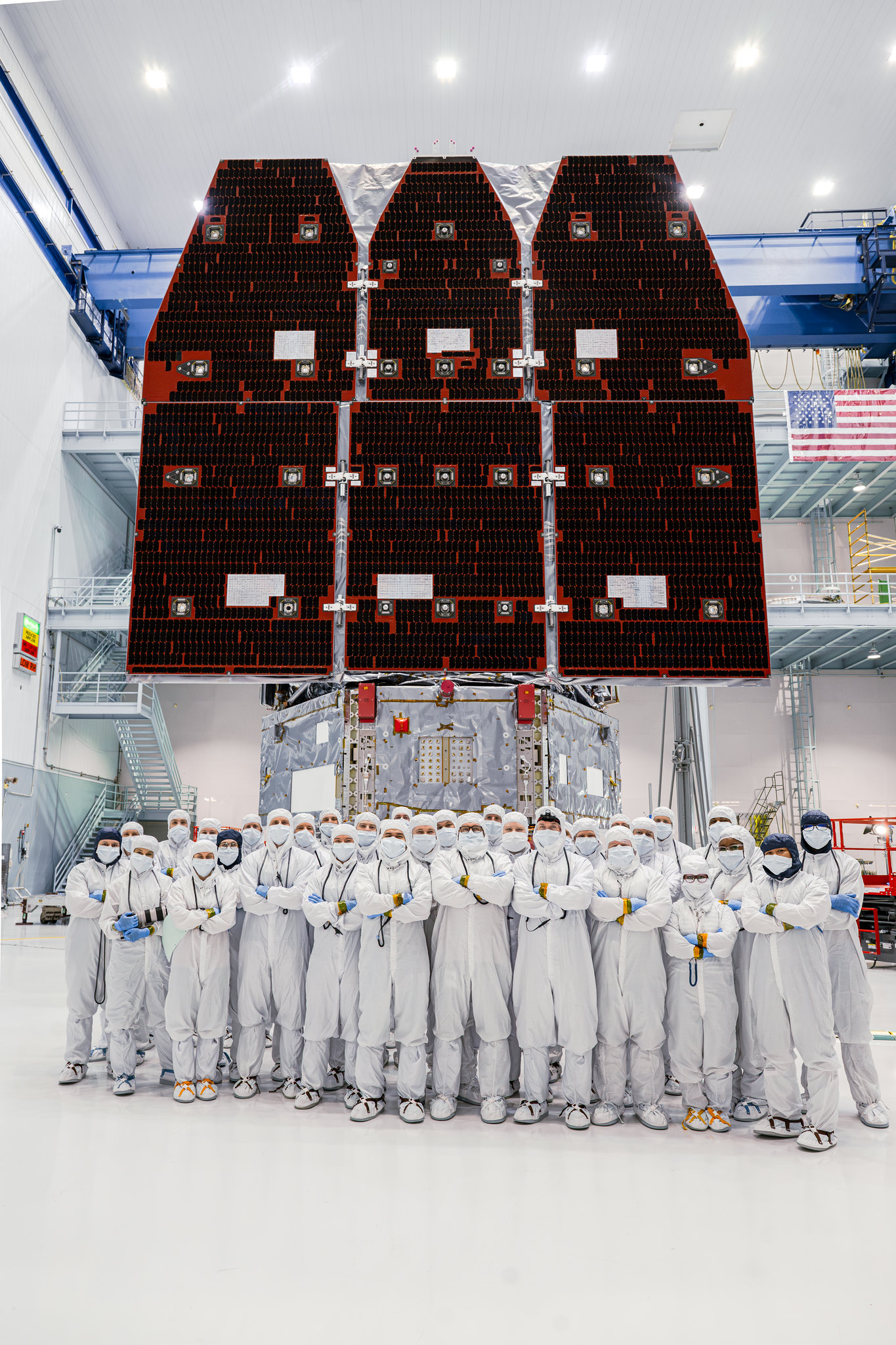
On Nov. 25, 2025, technicians joined the inner and outer segments together and the observatory was complete.
NASA / Sydney Rohde

What Will Scientists Study With the Nancy Grace Roman Space Telescope?

Scientists using the Nancy Grace Roman Space Telescope will focus on three main topic areas: dark energy, exoplanets, and dark matter.

Dark energy is a mysterious part of the universe. Scientists aren’t sure what it is, but it makes up about 68% of the universe’s total contents. It is believed to be responsible for the accelerating rate at which our universe is expanding. But recent observations seem to show that the pressure from dark energy is shifting over time. Scientists hope to use the Roman Space Telescope to help solve the mystery of dark energy’s true nature.

Exoplanets are planets outside of our solar system. Scientists have discovered more than 6,000 exoplanets. But they believe that billions could exist. Most of the exoplanets detected so far are wildly different than the planets in our solar system. Scientists expect Roman to find more unusual exoplanets. It will also allow astronomers to find planets in the habitable zone of their stars. This will be key to finding planets similar to Earth.

Dark matter is the invisible glue that holds the universe together. Scientists aren’t sure what dark matter is made of. Roman will allow scientists to peer back in time to trace how galaxies and galaxy clusters formed. If dark matter consists of heavy, sluggish particles, it would clump together readily and Roman should see galaxy formation early in cosmic history. If dark matter is made up of lighter, faster-moving particles, it should take longer to settle into clumps and for large-scale structures to develop. If astronomers can narrow down the candidates for dark matter particles, we’ll be one step closer to finally detecting them directly in experiments on Earth.

Who Was Nancy Grace Roman?

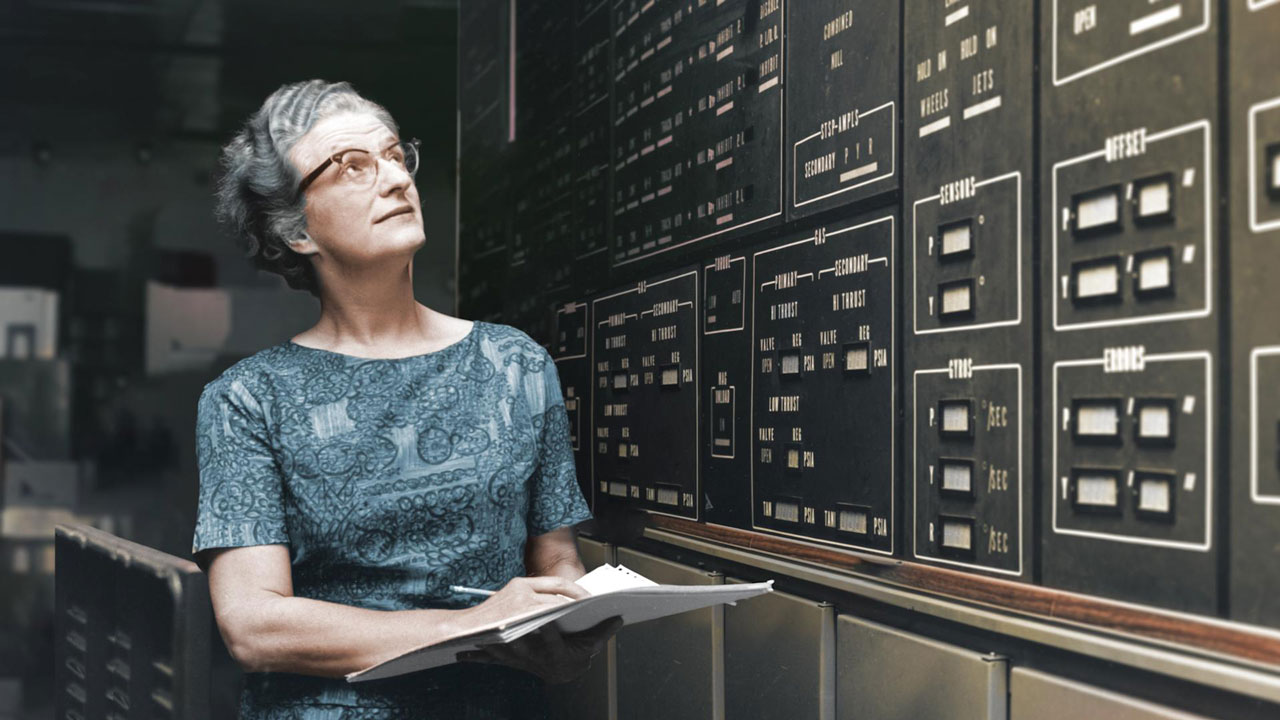
Nancy Grace Roman was NASA’s first chief astronomer and the first female executive at the agency. Roman championed the making of the first space-based telescope — the Hubble Space Telescope. She was involved in every crucial decision about the telescope from its funding to where it was built to the details of its instruments. Her vital role in making the project a reality led her to be known as “the mother of the Hubble Space Telescope.”

Roman was born May 16, 1925, in Nashville, Tennessee. She died Dec. 25, 2018.

Nancy Grace Roman was NASA’s first chief astronomer. She is knows as “the mother of the Hubble Space Telescope.”
NASA

Career Corner

More than a thousand technicians and engineers assembled Roman from millions of individual components. Here are a few examples of the careers that shaped NASA’s newest space telescope:

Instrument technician: These experts install, calibrate, and maintain sensors and control systems. They troubleshoot issues that might come up with delicate systems and equipment. This career path often starts with an apprenticeship or hands-on training alongside experienced technicians. An associate’s degree is often required.

Mechanical engineer: This branch of engineering focuses on complex machines and engines. Mechanical engineers design, build, test, and improve mechanical systems. They play an essential role in making a complex observatory like the Roman Space Telescope a reality. A career in engineering demands a strong understanding of math and complex problem-solving and usually requires an advanced college degree.

Astrophysicist: These scientists study the physics of the universe. They are interested in learning how the universe began, how it is evolving, and how it works. Becoming an astrophysicist requires advanced college degrees.

NASA also needs people who work in photography, management, social media, videography, and much more. Learn about some of the people who have made the Roman mission possible here!

More About the Nancy Grace Roman Space Telescope

Mission Website: Nancy Grace Roman Space Telescope

Video Game: Roman Space Observer

Roman Space Telescope Education and Outreach Materials


Explore More For Students Grades 5-8


Source: NASA

Source: NASA. Review credited third-party material before publication.

Filed under: Science & Space — NASA — News, Missions & Technology

Post navigation

Previous: Release Number 9281-26
Next: Montana governor deploys National Guard to support Washington fire response

More from Science & Space — NASA — News, Missions & Technology

Science & Space — NASA — News, Missions & Technology

3D 67P

Published October 17, 2026 · 2 min read
Science & Space — NASA — News, Missions & Technology

NASA Names Stephen Cash Marshall Space Flight Center Director

Published October 16, 2026 · 4 min read
Science & Space — NASA — News, Missions & Technology

I Am Artemis: Allison Mjoen

Published October 16, 2026 · 3 min read
Science & Space — NASA — News, Missions & Technology

Chasing the International Space Station

Published October 16, 2026 · 2 min read
Science & Space — NASA — News, Missions & Technology

Isaias Dims the Gulf Coast

Published October 16, 2026 · 5 min read
Science & Space — NASA — News, Missions & Technology

NASA to Help Unlock Mysteries of Mars’ Moons in Upcoming Mission

Published October 15, 2026 · 4 min read
Science & Space — NASA — News, Missions & Technology

NASA Satellites Observe Historic 2026 El Niño

Published October 15, 2026 · 6 min read
Science & Space — NASA — News, Missions & Technology

Power Up: Roll Out Solar Arrays Boost Space Station Power Supply

Published October 15, 2026 · 2 min read
Science & Space — NASA — News, Missions & Technology

NASA Welcomes All Ages, Experience Levels for Space Apps Challenge

Published October 15, 2026 · 4 min read
Science & Space — NASA — News, Missions & Technology

The Milky Way over Manhattan

Published October 15, 2026 · 2 min read
Science & Space — NASA — News, Missions & Technology

NASA to Host News Conference Previewing US Spacewalks 100, 101

Published October 14, 2026 · 2 min read
Science & Space — NASA — News, Missions & Technology

NASA Astronauts to Answer Questions from Florida Students

Published October 14, 2026 · 2 min read
Science & Space — NASA — News, Missions & Technology

NASA’s Chandra Breaks Down ‘Treble Clef’s’ Galaxy Cluster Collision

Published October 14, 2026 · 5 min read
Science & Space — NASA — News, Missions & Technology

Mars and the Beehive Under an Aurora

Published October 14, 2026 · 2 min read
Science & Space — NASA — News, Missions & Technology

NASA Names Astronaut Christina Koch Acting Deputy Chief Engineer

Published October 13, 2026 · 4 min read
Science & Space — NASA — News, Missions & Technology

TB 26-08 Complex Modes in Lightly Damped Structural Systems: A Two-Mode Interaction Perspective

Published October 13, 2026 · 2 min read
Science & Space — NASA — News, Missions & Technology

NASA JPL Testing Readies Voyager Technologies Lander for Moon Mission

Published October 13, 2026 · 5 min read
Science & Space — NASA — News, Missions & Technology

NASA Science, Cargo Launch on 35th SpaceX Resupply Mission to Station

Published October 13, 2026 · 3 min read
Science & Space — NASA — News, Missions & Technology

Desert Stairway to Heaven

Published October 13, 2026 · 2 min read
Science & Space — NASA — News, Missions & Technology

An Impact Structure With Legs

Published October 13, 2026 · 2 min read
Science & Space — NASA — News, Missions & Technology

NASA’s SpaceX CRS-35 Mission to Launch Health Research

Published October 12, 2026 · 3 min read
Science & Space — NASA — News, Missions & Technology

Jupiter and the Moons

Published October 12, 2026 · 2 min read
Science & Space — NASA — News, Missions & Technology

Antarctic Sea Ice Grows to Its 2026 Maximum

Published October 12, 2026 · 3 min read
Science & Space — NASA — News, Missions & Technology

Ice Fishing for Cosmic Neutrinos

Published October 11, 2026 · 2 min read
Science & Space — NASA — News, Missions & Technology

Lunar Farside

Published October 10, 2026 · 1 min read
Science & Space — NASA — News, Missions & Technology

NASA Seeks US Industry Plans for Commercial Space Stations

Published October 9, 2026 · 2 min read
Science & Space — NASA — News, Missions & Technology

NASA Demonstrates Next-Generation Heat Shield Technologies

Published October 9, 2026 · 4 min read
Science & Space — NASA — News, Missions & Technology

Stickney Crater

Published October 9, 2026 · 2 min read
Science & Space — NASA — News, Missions & Technology

Floodwaters Overwhelm Thailand

Published October 9, 2026 · 3 min read
Science & Space — NASA — News, Missions & Technology

NASA Briefing to Highlight Contributions to Martian Moons Mission

Published October 8, 2026 · 2 min read
Science & Space — NASA — News, Missions & Technology

NASA Announces Bold Science Initiatives for America’s Golden Age Summit

Published October 8, 2026 · 2 min read
Science & Space — NASA — News, Missions & Technology

NASA’s SpaceX Crew‑12 Splashes Down, Sets Briefing to Discuss Mission

Published October 8, 2026 · 4 min read
Science & Space — NASA — News, Missions & Technology

NASA, Energy Department Advance New Era of Nuclear-Powered Exploration

Published October 8, 2026 · 4 min read
Science & Space — NASA — News, Missions & Technology

The Saturn System Smörgåsbord

Published October 8, 2026 · 2 min read
Science & Space — NASA — News, Missions & Technology

Fighting Drought in Texas Cotton Country

Published October 8, 2026 · 7 min read
Science & Space — NASA — News, Missions & Technology

NASA Sets Coverage for SpaceX 35th Station Resupply Launch, Arrival

Published October 7, 2026 · 4 min read
Science & Space — NASA — News, Missions & Technology

NASA’s SpaceX 35th Commercial Resupply Mission Overview

Published October 7, 2026 · 4 min read
Science & Space — NASA — News, Missions & Technology

Supernova Remnant Pa 30

Published October 7, 2026 · 2 min read
Science & Space — NASA — News, Missions & Technology

Arctic Sea Ice Shrinks to Its 2026 Minimum

Published October 7, 2026 · 4 min read
Science & Space — NASA — News, Missions & Technology

NASA to Cover Northrop Grumman CRS-24 Spacecraft Departure

Published October 6, 2026 · 2 min read

Search

Recent Posts
  • Why Trump’s midterm blues mean short-term gain, long-term pain for China
  • Shipping crews caught in the crossfire of the Hormuz conflict | DW News
  • LIVE: French students, workers, pensioners protest in Marseille
  • LIVE: Protests in France as trade unions hold nationwide strikes
  • Joshua Wong’s friend says jailed Hong Kong activist reading books, learning guitar inside prison
  • Blue wave sets up possible IMPEACHMENT of Trump’s attorney general, Todd Blanche
  • Over 300,000 tarantulas seized in Peru | DW News
  • The Last Word with Lawrence O’Donnell – Nov. 4 | Audio Only
  • Vance blames Iran war for GOP midterms loss, Trump brags about WH ballroom | MS NOW Highlights
  • Hope and faith in the American dream behind blue surge in Latino vote in Texas
Categories
  • Florida (110)
    • Jacksonville (20)
    • Miami (62)
    • Orlando (17)
    • Tampa (11)
  • Health (1)
  • New York (69)
    • New York City (69)
  • Science (85)
    • Health & Medical Research (10)
    • U.S. Geological Survey (18)
    • U.S. National Science Foundation (57)
  • Science & Space (364)
    • NASA — Centers & Facilities (82)
    • NASA — JPL & Near-Earth Objects (4)
    • NASA — News, Missions & Technology (242)
    • NASA — Photos & Visual Records (36)
  • Trump (1146)
  • U.S. Civil Service (245)
    • Cabinet — Department of Agriculture (8)
    • Independent Agencies — Commodity Futures Trading Commission (19)
    • Independent Agencies — Consumer Financial Protection Bureau (12)
    • Independent Agencies — Consumer Product Safety Commission (32)
    • Independent Agencies — Equal Employment Opportunity Commission (64)
    • Independent Agencies — Federal Reserve Board (1)
    • Independent Agencies — Federal Trade Commission (46)
    • Independent Agencies — National Labor Relations Board (22)
    • Independent Agencies — Securities and Exchange Commission (41)
  • U.S. Government (11)
    • DOJ — National (8)
    • DOJ — U.S. Attorneys (10)
    • GAO — News & Analysis (43)
    • GAO — Reports & Decisions (158)
    • Department of Justice (10)
    • Government Accountability Office (1)
  • U.S. News (2483)
  • U.S. Veterans (255)
    • Benefits (25)
    • Disabled Veterans (10)
    • Employment (10)
    • Health & Care (64)
    • News (146)
  • Washington (233)
    • Washington (87)
      • Seattle (57)
      • Spokane (30)
  • World News (1942)

Recent Comments

No recent comments.

Archives
  • November 2026 (218)
  • October 2026 (1794)
  • September 2026 (2072)
  • August 2026 (1879)
  • July 2026 (17)
  • June 2026 (8)
  • May 2026 (1)
  • April 2026 (6)
  • March 2026 (1)
  • January 2026 (3)
  • December 2025 (1)
  • November 2025 (1)

Thirstier News is a service of Thirstier, a DBA of Immix Tachyon Synergy Network LLC.

© 2026 Thirstier. Thirstier Theme is an original theme from Thirstier.