
Skip to content
Thirstier News October 1, 2026
Home
Thirstier News
  • ABC Live
  • Al Jazeera
  • CBS Live
  • Contact
  • France 24
  • Live News
  • NBC Live
Popular Tags
  • YouTube
  • U.S. News
  • World News
  • MS NOW
  • PBS NewsHour
  • Al Jazeera English
  • DW News
Science & Space — NASA — Centers & Facilities

NASA Highlights Lessons Learned From Swift Boost Mission

Published September 28, 2026 · 6 min read
· By Thirstier News

A commercial mission to boost NASA’s Neil Gehrels Swift Observatory concluded without raising the spacecraft’s orbit, but the agency and industry vendor Katalyst Space have gained valuable experience that will benefit future in-space servicing programs.

“From the beginning, this was a high-risk, high-reward mission,” said Shawn Domagal-Goldman, Astrophysics Division director at NASA Headquarters in Washington. “Without intervention, Swift was going to re-enter the atmosphere by year’s end. And while we’ll be sad to see Swift’s mission come to a close, we knew this boost effort would be valuable to the agency on multiple levels — advancing U.S. spacecraft servicing technology, challenging us to meet unprecedented mission timelines, and testing how we operate satellites to extend their time in low Earth orbit. We’re very proud of how quickly this team got so far, and we’re capturing lessons learned to ensure we’re ready to go even farther.”

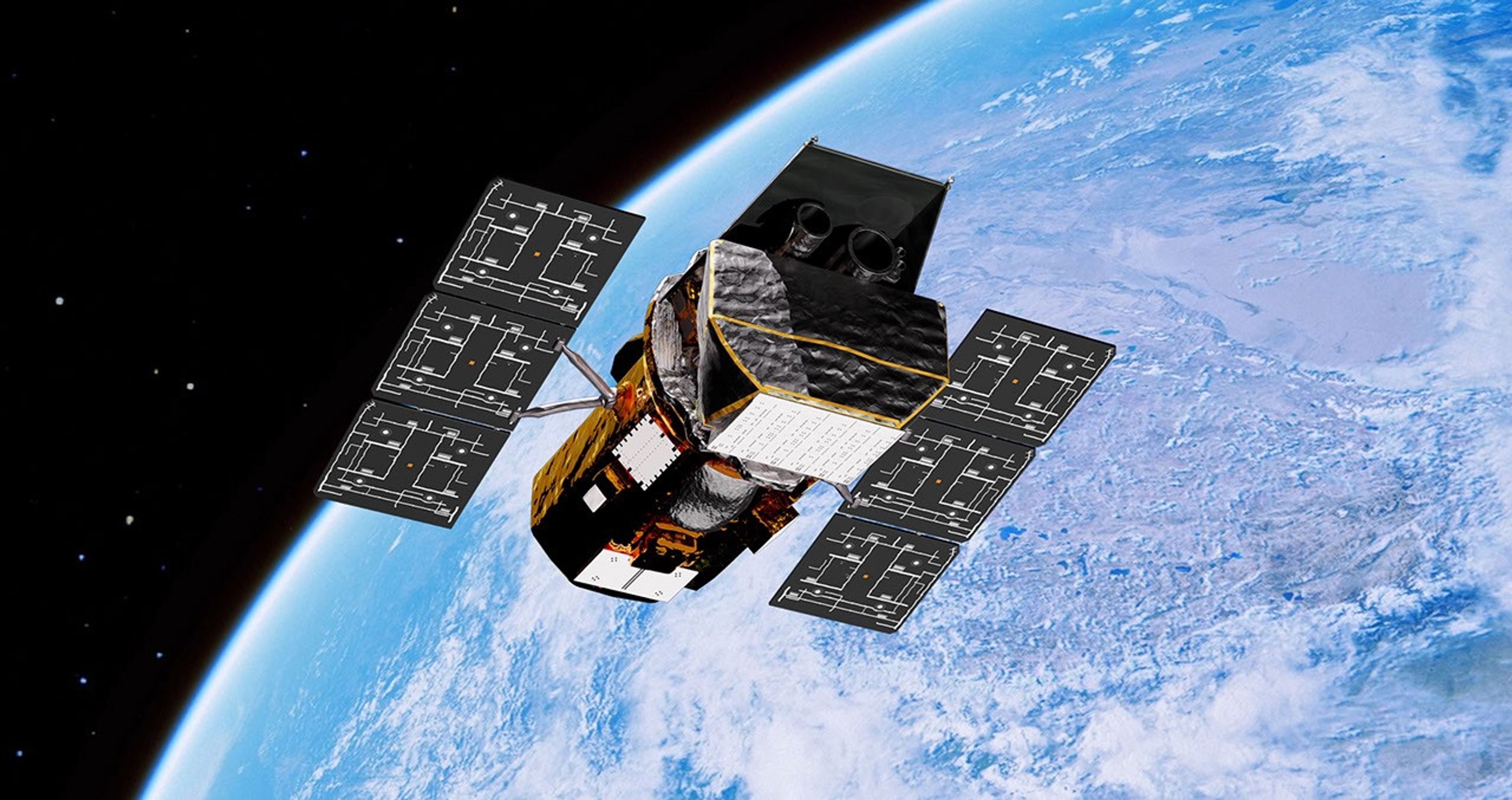
NASA’s Neil Gehrels Swift Observatory orbits above Earth in this artist’s concept.
NASA’s Goddard Space Flight Center Conceptual Image Lab

Swift, which launched in November 2004, was designed to study gamma-ray bursts, the most powerful explosions in the cosmos.

Over the last two decades, the observatory has revolutionized our understanding of how the universe works, from studying comets and asteroids in our own solar system and various types of cosmic explosions to flares from black holes in distant galaxies.

All spacecraft in low Earth orbit experience drag from our planet’s atmosphere. If they don’t have propulsion systems, this drag gradually reduces their altitudes. A period of increased solar activity magnified this effect on Swift.

After deciding to investigate the potential for a boost attempt, NASA had only a few months to issue a call for proposals through its Center of Excellence for Collaborative Engineering and fund design concept studies through the agency’s Small Business Innovation Research program.

In September 2025, NASA contracted Katalyst, based in Flagstaff, Arizona, to attempt the mission. The company had around one year to design, build, test, and launch a satellite that would then meet, grab, and lift Swift.

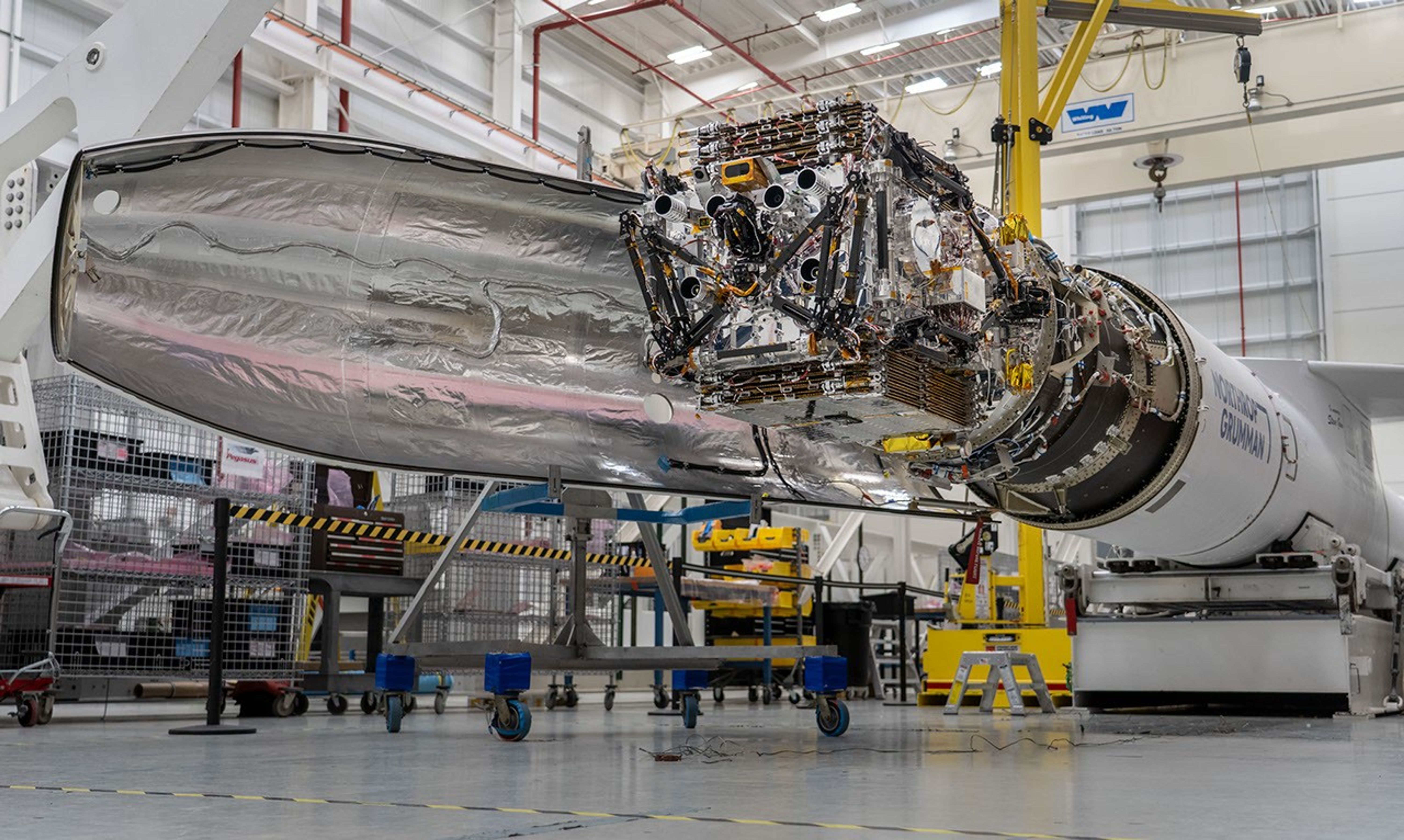
Katalyst Space’s LINK robotic servicing spacecraft awaits encapsulation inside a Northrop Grumman Pegasus XL rocket on June 8, 2026, at NASA’s Wallops Flight Facility in Virginia.
NASA/Ron Beard

The LINK spacecraft took off from Kwajalein Atoll in the Republic of the Marshall Islands in July aboard a Northrop Grumman Pegasus XL rocket. Katalyst selected the Pegasus as the best launch option for reaching the observatory on the mission’s condensed timeline, based on the mission’s orbital and programmatic needs.

After successfully reaching space and performing initial spacecraft checkouts, LINK began experiencing intermittent communications losses and developed issues with its orientation control.

Following a period of around-the-clock troubleshooting from both teams, NASA and Katalyst agreed to scale back the mission. LINK would no longer attempt to grab or boost Swift but instead attempt to perform a series of technology demonstrations that would advance the capabilities of the U.S. commercial servicing industry.

These included exercising the spacecraft’s xenon-powered propulsion system and three robotic arms, which were designed to provide flexibility regarding where LINK could safely grapple Swift. NASA formally concluded the agency’s involvement in LINK’s mission on Sept. 3. The spacecraft re-entered the atmosphere on Sept. 25.

“LINK was built to take on a problem that did not have an easy solution,” said Ghonhee Lee, CEO of Katalyst Space. “This was an ambitious mission on an aggressive timeline. While we did not accomplish every objective we set out to achieve, in less than a year we went from mission concept to launching and operating the first commercial space robot. This is a foundation we can build on.”

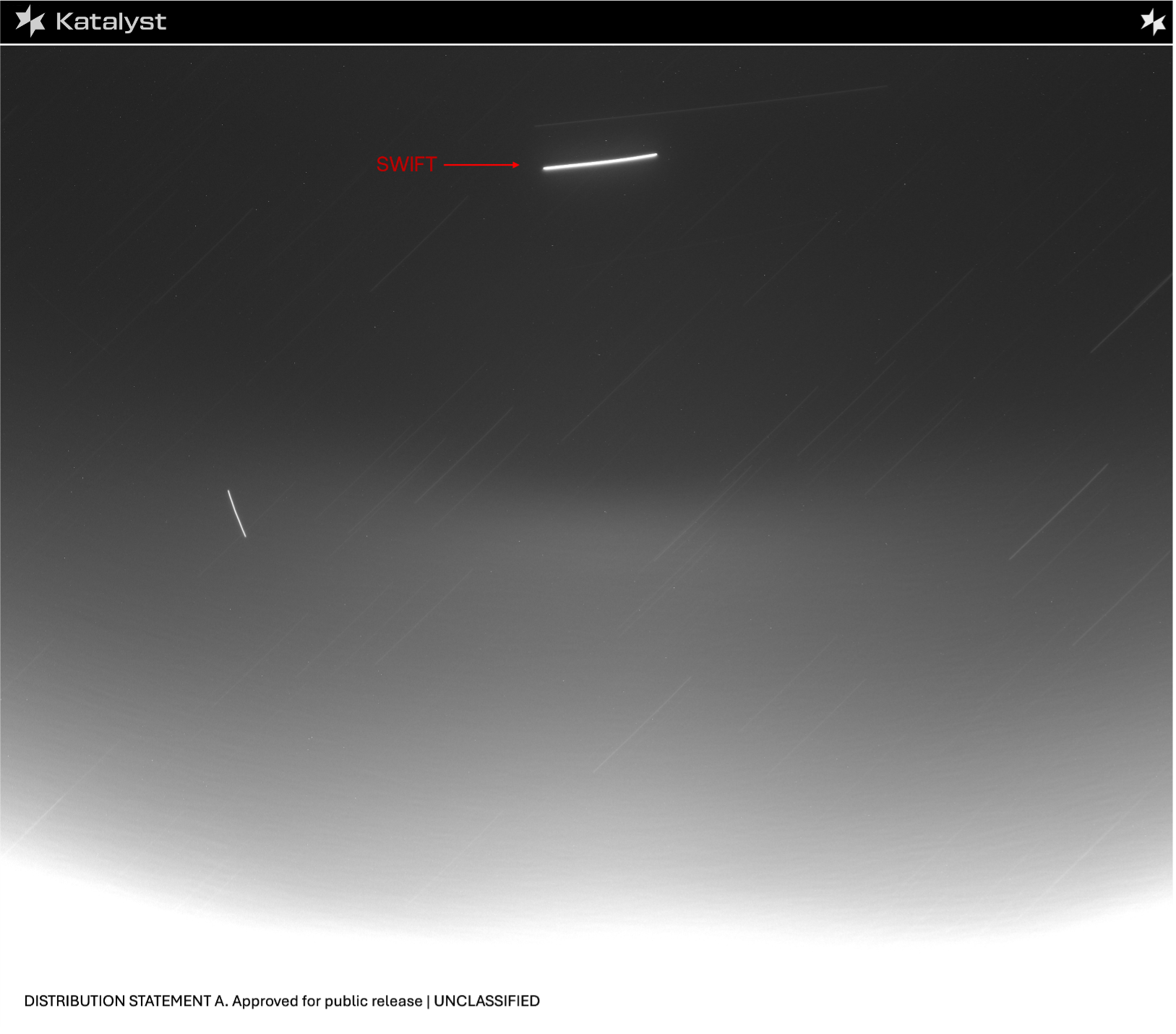
NASA’s Neil Gehrels Swift Observatory is seen as a streak in this image captured by Katalyst Space’s LINK spacecraft as it passed between 7.5 and 9 miles (12 to 15 kilometers) of Swift
Katalyst Space

Science missions like Swift take years to develop and then operate in orbit for decades. For the Swift boost, however, the most important factor was the timeline. All decision-making and risk acceptance hinged on predictions showing the observatory sinking to the point of no return — an altitude of around 185 miles (300 kilometers) — in fall 2026. As such, the boost mission required a new form of agile project management for NASA.

Swift team members in SSMO (Space Science Mission Operations) at NASA’s Goddard Space Flight Center in Greenbelt, Maryland, worked with Katalyst to develop milestones and approval processes that gave the mission the best chance of success while being flexible enough to move quickly toward launch.

Both groups received valuable input and feedback from NASA’s Engineering and Safety Center when tackling questions and issues that arose during integration and testing.

“Katalyst was committed to leveraging NASA’s deep experience to give themselves the best possible chance of successfully achieving the unprecedented challenge we gave them,” said Russell Carpenter, project manager in SSMO at NASA Goddard “Missions like these, where public-private teams work tenaciously to overcome obstacles, are an inspiration to the world, reminding us that striving for the near impossible brings out what is exceptional in all of us.”

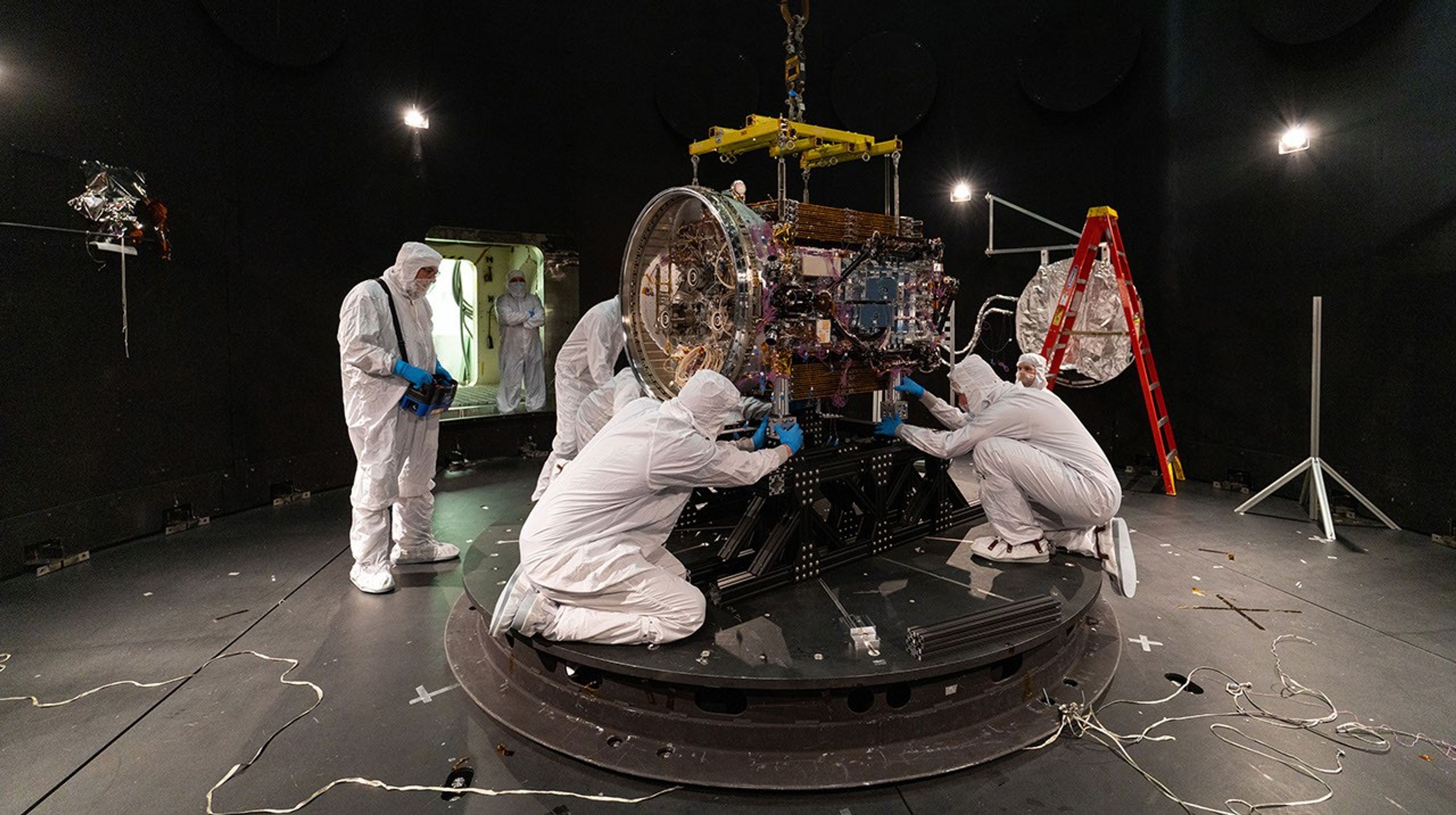
Katalyst engineers attach LINK to a baseplate inside the Space Environment Simulator at NASA’s Goddard Space Flight Center in Greenbelt, Md., on April 28, 2026. Once all the air was pumped out of the 27-foot-diameter chamber, the team practiced firing the satellite’s ion thrusters and operated one of the robotic arms while they cycled through space-like hot and cold temperatures.
NASA/Sophia Roberts

While teams at NASA and Katalyst were racing to get LINK ready on the ground, flight controllers in Swift’s Mission Operations Center, located at Penn State in University Park in Pennsylvania, were trying to keep Swift above the critical altitude for as long as possible. Below it, any boost attempt would become increasingly difficult.

During normal operations, the Penn State team sends a plan to Swift that tells the observatory which cosmic objects and events to observe each day.

In December 2025, however, the controllers started swapping around 25% of these science targets for points on the sky that would minimize drag when Swift was trained on them. By February, the team had switched over to this approach entirely.

“Even though Swift was not executing pointed science observations from mid-February to late August, we nonetheless continued Penn State’s history of innovative space research and operations, pioneering new methods to minimize drag experienced by the spacecraft,” said John Nousek, the mission director and professor of astronomy and astrophysics in the university’s Eberly College of Science. “These changes bought valuable time for the boost mission and can be carried forward for future NASA missions.”

The team also couldn’t point too close to Earth, the Moon, or the Sun, since the brightness of all three could overheat and damage the observatory’s instruments. Pointing Swift in the most streamlined position also tilted it too close to the atmosphere, where particles could collide with the telescopes and affect future observations. The team struck a balance that managed to maintain Swift’s altitude above the critical threshold for several months.

“We’re grateful to all our collaborators for the incredible amount of time and dedication they’ve put into the boost mission,” said S. Bradley Cenko, Swift’s principal investigator at NASA Goddard. “When Neil Gehrels, Swift’s namesake, designed the observatory, nothing like it had ever launched. He would have celebrated that this boost effort was part of Swift’s legacy, that it allowed NASA to try something new and daring even though the outcome wasn’t guaranteed. That’s how we explore the universe — as a team, learning from each other, constantly pushing forward.”

@NASAUniverse

@NASAUniverse

@NASAUniverse


Source: Wallops Flight Facility – NASA

Filed under: Science & Space — NASA — Centers & Facilities

Post navigation

Previous: Secretary Rubio meets with Saudi Foreign Minister Prince Faisal bin Farhan Al Saud
Next: SEC Charges Registered Investment Adviser Zoe Financial for Failure to Disclose Conflict of Interest

More from Science & Space — NASA — Centers & Facilities

Science & Space — NASA — Centers & Facilities

NASA Awards Contract to Develop 5G Communications for Moon

Published September 30, 2026 · 1 min read
Science & Space — NASA — Centers & Facilities

NASA Adds Blue Origin New Glenn 9×4 to Launch Services Contract

Published September 29, 2026 · 1 min read
Science & Space — NASA — Centers & Facilities

Meet NASA’s Artemis II Crew During Houston Public Event

Published September 28, 2026 · 2 min read
Science & Space — NASA — Centers & Facilities

Reliable Robots: Meet Johnson’s Dexterous Robotics Team

Published September 28, 2026 · 5 min read
Science & Space — NASA — Centers & Facilities

Uncovering the Valleys Hidden Below Greenland’s Ice

Published September 28, 2026 · 4 min read
Science & Space — NASA — Centers & Facilities

NASA Tests Dual Mode Propulsion CubeSat Ahead of Launch

Published September 25, 2026 · 4 min read
Science & Space — NASA — Centers & Facilities

NASA Unveils Winning Designs for Mars Space Food Systems Challenge 

Published September 24, 2026 · 4 min read
Science & Space — NASA — Centers & Facilities

US-India Satellite Captures Time-lapse Video of Volcanic Eruption

Published September 24, 2026 · 5 min read
Science & Space — NASA — Centers & Facilities

NASA Aircraft to Make Low-Altitude Research Flights Over Colorado

Published September 23, 2026 · 2 min read
Science & Space — NASA — Centers & Facilities

NASA’s Hubble Seeks Lensed Supernova, Marks 200,000 Orbits

Published September 23, 2026 · 2 min read
Science & Space — NASA — Centers & Facilities

Johnson Space Center Sparks Curiosity at Houston’s 33rd Annual Japan Festival  

Published September 21, 2026 · 3 min read
Science & Space — NASA — Centers & Facilities

NASA’s Moon Orbiter Spots New, ‘Once-in-Century’ Moon Crater

Published September 16, 2026 · 4 min read
Science & Space — NASA — Centers & Facilities

How 2 US, European Satellites Are Studying Hurricanes During El Niño

Published September 9, 2026 · 5 min read
Science & Space — NASA — Centers & Facilities

NASA’s Hubble, Webb Find Far-out Solar System Objects ‘Remember’ Past

Published September 8, 2026 · 5 min read
Science & Space — NASA — Centers & Facilities

NASA Rocket Takes First Multi-Point Look Inside Radio-Disrupting Clouds

Published September 2, 2026 · 5 min read
Science & Space — NASA — Centers & Facilities

NASA’s Dark Universe-Seeking Nancy Grace Roman Space Telescope Launches

Published August 30, 2026 · 5 min read
Science & Space — NASA — Centers & Facilities

NASA Astronaut Jonny Kim Departs Agency to Continue Military Service

Published August 27, 2026 · 4 min read
Science & Space — NASA — Centers & Facilities

NASA Ames’ Contributions to Roman’s Mission

Published August 25, 2026 · 6 min read
Science & Space — NASA — Centers & Facilities

NASA Ames Experts Available for Roman Space Telescope Interviews 

Published August 25, 2026 · 2 min read
Science & Space — NASA — Centers & Facilities

NASA’s Pandora Mission Begins Study of Exoplanets, Host Stars

Published August 25, 2026 · 5 min read
Science & Space — NASA — Centers & Facilities

Galactic Gems Glisten in New Gallery From NASA’s Chandra

Published August 25, 2026 · 12 min read
Science & Space — NASA — Centers & Facilities

Starstruck: NASA Research Shows How Sun’s Ancient History Shaped Earth

Published August 24, 2026 · 7 min read
Science & Space — NASA — Centers & Facilities

NASA Data Feeds River Forecasts as Snow Drought Effects Linger

Published August 20, 2026 · 6 min read
Science & Space — NASA — Centers & Facilities

Human-Related Microbes May Survive Moon’s South Pole, NASA Finds

Published August 19, 2026 · 6 min read
Science & Space — NASA — Centers & Facilities

NASA’s LRO Images Falcon 9 Crater on Moon, Learns New Details

Published August 18, 2026 · 5 min read
Science & Space — NASA — Centers & Facilities

NASA Glenn’s Legacy Forged Through Decades of Flight Research

Published August 18, 2026 · 7 min read
Science & Space — NASA — Centers & Facilities

NASA Challenge Tests Wheel Designs for Moon Base Mobility

Published August 17, 2026 · 5 min read
Science & Space — NASA — Centers & Facilities

Hubble Solves Merger Mystery From Milky Way’s Early Years

Published August 17, 2026 · 6 min read
Science & Space — NASA — Centers & Facilities

NASA’s COFFIES Uses AI to Predict Storm-Causing Active Regions on Sun 

Published August 14, 2026 · 7 min read
Science & Space — NASA — Centers & Facilities

For West Virginia Engineer, Home Is Where the Heart Is… and NASA, Too

Published August 13, 2026 · 5 min read
Science & Space — NASA — Centers & Facilities

NASA Upgrades Vertical Motion Simulator for Modern Mission Needs

Published August 12, 2026 · 3 min read
Science & Space — NASA — Centers & Facilities

NASA Completes Astronaut-Deployed Science Instrument for Lunar Surface

Published August 11, 2026 · 6 min read
Science & Space — NASA — Centers & Facilities

Lion Nebula Roars to Life With NASA’s Webb

Published August 10, 2026 · 5 min read
Science & Space — NASA — Centers & Facilities

NASA’s Lunar Development and Test Facility Prepares Artemis Hardware for Moon 

Published August 7, 2026 · 3 min read
Science & Space — NASA — Centers & Facilities

NASA’s Perseverance Rover Watches Earth Vanish Behind Martian Moon

Published August 5, 2026 · 5 min read
Science & Space — NASA — Centers & Facilities

NASA Will Attempt to Observe Rocket Part’s Lunar Impact

Published August 4, 2026 · 3 min read
Science & Space — NASA — Centers & Facilities

NASA’s PUNCH Sharpens Solar Storm Forecasting in First Test

Published August 4, 2026 · 4 min read
Science & Space — NASA — Centers & Facilities

NASA Provides Updates on Moon Base Cargo Landers, Tech Demonstrations

Published August 4, 2026 · 7 min read
Science & Space — NASA — Centers & Facilities

Louisiana Students Loft Payloads from NASA Balloon Facility in Texas

Published August 3, 2026 · 4 min read
Science & Space — NASA — Centers & Facilities

NASA Awards Contract for Construction Services in California

Published August 3, 2026 · 2 min read

Search

Recent Posts
  • AI: No one should use it to impose their worldview – OpenAI Briefing | United Nations
  • Would a world without international law bring on Armageddon? #DohaDebates
  • US death row inmate survives execution attempt | DW News
  • Pakistan says strikes in Afghanistan’s Helmand killed 22 fighters; Kabul reports civilian deaths
  • Estonia: Why young people can’t find entry-level jobs | DW News
  • How will investigation into Flydubai flight attack unfold? | AJ #shorts
  • Turkish fans show support for Palestine at friendly fixture | #AJ shorts
  • EU enforces AI transparency rules as regulators race to curb tech risks
  • Portugal coach responds after Ronaldo leaves camp | AJ #shorts
  • Gaza reconstruction stalled as attacks continue, analyst says
Categories
  • Florida (110)
    • Jacksonville (20)
    • Miami (62)
    • Orlando (17)
    • Tampa (11)
  • Health (1)
  • New York (69)
    • New York City (69)
  • Science (80)
    • Health & Medical Research (10)
    • U.S. Geological Survey (18)
    • U.S. National Science Foundation (52)
  • Science & Space (288)
    • NASA — Centers & Facilities (70)
    • NASA — JPL & Near-Earth Objects (4)
    • NASA — News, Missions & Technology (178)
    • NASA — Photos & Visual Records (36)
  • Trump (715)
  • U.S. Civil Service (204)
    • Cabinet — Department of Agriculture (8)
    • Independent Agencies — Commodity Futures Trading Commission (18)
    • Independent Agencies — Consumer Financial Protection Bureau (10)
    • Independent Agencies — Consumer Product Safety Commission (26)
    • Independent Agencies — Equal Employment Opportunity Commission (54)
    • Independent Agencies — Federal Reserve Board (1)
    • Independent Agencies — Federal Trade Commission (33)
    • Independent Agencies — National Labor Relations Board (20)
    • Independent Agencies — Securities and Exchange Commission (34)
  • U.S. Government (11)
    • DOJ — National (8)
    • DOJ — U.S. Attorneys (7)
    • GAO — News & Analysis (34)
    • GAO — Reports & Decisions (128)
    • Department of Justice (10)
    • Government Accountability Office (1)
  • U.S. News (1443)
  • U.S. Veterans (210)
    • Benefits (24)
    • Disabled Veterans (10)
    • Employment (10)
    • Health & Care (54)
    • News (112)
  • Washington (203)
    • Washington (87)
      • Seattle (57)
      • Spokane (30)
  • World News (1232)

Recent Comments

No recent comments.

Archives
  • October 2026 (30)
  • September 2026 (2071)
  • August 2026 (1880)
  • July 2026 (16)
  • June 2026 (8)
  • May 2026 (1)
  • April 2026 (5)
  • March 2026 (1)
  • January 2026 (3)
  • November 2025 (1)
  • August 2025 (1)
  • July 2025 (1)

Thirstier News is a service of Thirstier, a DBA of Immix Tachyon Synergy Network LLC.

© 2026 Thirstier. Thirstier Theme is an original theme from Thirstier.