
Skip to content
Thirstier News September 16, 2026
Home
Thirstier News
  • ABC Live
  • Al Jazeera
  • CBS Live
  • Contact
  • France 24
  • Live News
  • NBC Live
Popular Tags
  • YouTube
  • U.S. News
  • World News
  • MS NOW
  • PBS NewsHour
  • Al Jazeera English
  • DW News
Science & Space — NASA — Centers & Facilities

Starstruck: NASA Research Shows How Sun’s Ancient History Shaped Earth

Published August 24, 2026 · 7 min read
· By Thirstier News
6 Min Read

Starstruck: NASA Research Shows How Sun’s Ancient History Shaped Earth

Desiree Apodaca

NASA’s Heliophysics Missions Communications Lead

Miles Hatfield

Aug 24, 2026
Article

Contents

  • A Sun on the move 
  • Next frontier in studying heliophysics 
  • Young Sun 
  • Unearthing secrets of our star-planet system 

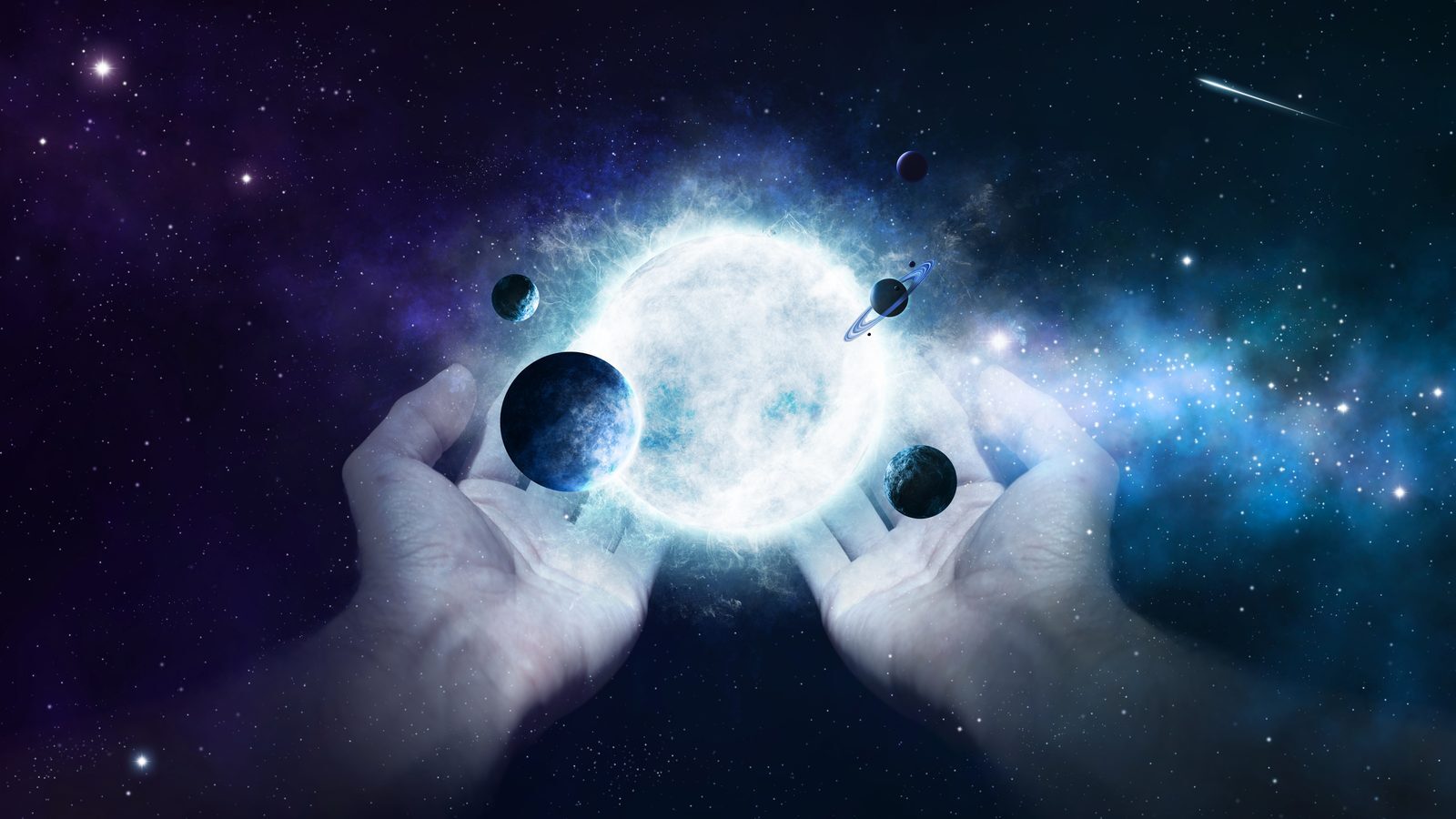
At the center of our solar system, the Sun influences every planet that orbits it. In two recent NASA-funded studies, scientists uncovered how ancient events in the Sun’s history may have helped create Earth’s unique climate and driven previously unexplained climatic shifts.  

In new research, scientists at NASA’s SHIELD (Solar Wind with Hydrogen Ion charge Exchange and Large-Scale Dynamics) center — one of NASA’s DRIVE (Diversify, Realize, Integrate, Venture, Educate) Science Centers — trace the trajectory of the heliosphere, the massive bubble created by our Sun that envelops our solar system, as it moved through our galaxy and influenced Earth’s climate along the way. In another paper, a NASA scientist and coauthors investigate how the younger, dimmer Sun managed to heat Earth by seeding the production of potent greenhouse gases.

A Sun on the move 

Over the last tens of millions of years, Earth’s climate has undergone significant shifts, including notable ice ages in which the global average temperature temporarily dropped by several degrees. During these periods, more frequent climate swings led Earth to warm and cool. To explain these periods of warming and cooling, scientists looked to factors internal to Earth, including orbital changes, greenhouse gases, and ice. But new research suggests changes to the Sun’s environment may be key to understanding Earth’s temperature swings. 

Just as our planet is encased by an atmosphere, so our entire solar system is encased inside a kind of “atmosphere” created by the Sun. This protective bubble, known as the heliosphere, is formed by a continuous solar wind of charged particles streaming out from the Sun in all directions. 

To view this video please enable JavaScript, and consider upgrading to a web browser that
supports HTML5 video

This conceptual animation begins with a view of the Milky Way Galaxy. As we zoom in, we travel to the Local Interstellar Cloud, and then to the heliosphere, the protective bubble that surrounds our solar system. The heliosphere is formed by a continuous stream of charged particles from the Sun, called the solar wind.
NASA’s Goddard Space Flight Center Conceptual Image Lab

Our heliosphere orbits around the center of our galaxy, the Milky Way. Throughout the Sun’s 4.6-billion-year existence, our heliosphere has traversed various regions within our galaxy. In a paper published on Aug. 21 in Annual Review of Astronomy and Astrophysics, researchers at NASA’s SHIELD used computer modeling to reverse-engineer the path of the heliosphere through our galaxy, revealing that the environments it passed through may have triggered changes on Earth.   

Merav Opher, SHIELD’s principal investigator at Boston University, and her team ran simulations that showed the Sun has encountered frigid expanses of gas and dust at least three different times in the past few million years. In these instances, massive interstellar “cold clouds” pushed against the heliosphere to such an extent that it shrank to smaller than Earth’s orbit, stranding our planet outside the Sun’s protective shield. 

These exposures — approximately 2 to 3 million years, 6 to 7 million years, and 13 to 14 million years ago — would have exposed Earth’s atmosphere to totally different surroundings. The simulation results match geologic evidence: Elements prevalent in interstellar dust appear in deep-sea sediment core samples, Antarctic snow, and lunar samples during these timelines. 

To view this video please enable JavaScript, and consider upgrading to a web browser that
supports HTML5 video

This animated illustration shows Earth and the Sun protected by the heliosphere, the massive bubble created by our Sun. As our solar system traverses through the galaxy, encounters with massive interstellar “cold clouds” pushed against the heliosphere and caused the heliosphere to shrink past Earth, exposing the planet to cosmic radiation and elements from interstellar space.
NASA’s SHIELD DRIVE Science Center/Merav Opher/Harvard Radcliffe Institute

These heliosphere collapse events may also explain ancient climatic patterns on Earth. In the simulations, when Earth’s atmosphere was exposed to a cold, dense galactic hydrogen cloud, it increased water vapor content and shifted upper-atmospheric dynamics, ultimately altering the conditions at the surface. In summary, our heliosphere’s trips through colder regions in our galaxy may be a key factor in driving some of Earth’s ancient changes in climate, including possible ice ages.  

Next frontier in studying heliophysics 

The SHIELD center is one of several that NASA funds to unlock the next generation of heliospheric research. As a DRIVE Science Center, SHIELD builds a team of researchers with differing expertise, approaches, and opinions to develop a model, or “digital twin,” of the heliosphere that helps reveal how the heliosphere interacts with its surroundings, including dense interstellar clouds. Understanding our unique, habitable solar system will help unravel the mysteries of life’s evolution on Earth and potentially uncover other habitable star systems. 

Young Sun 

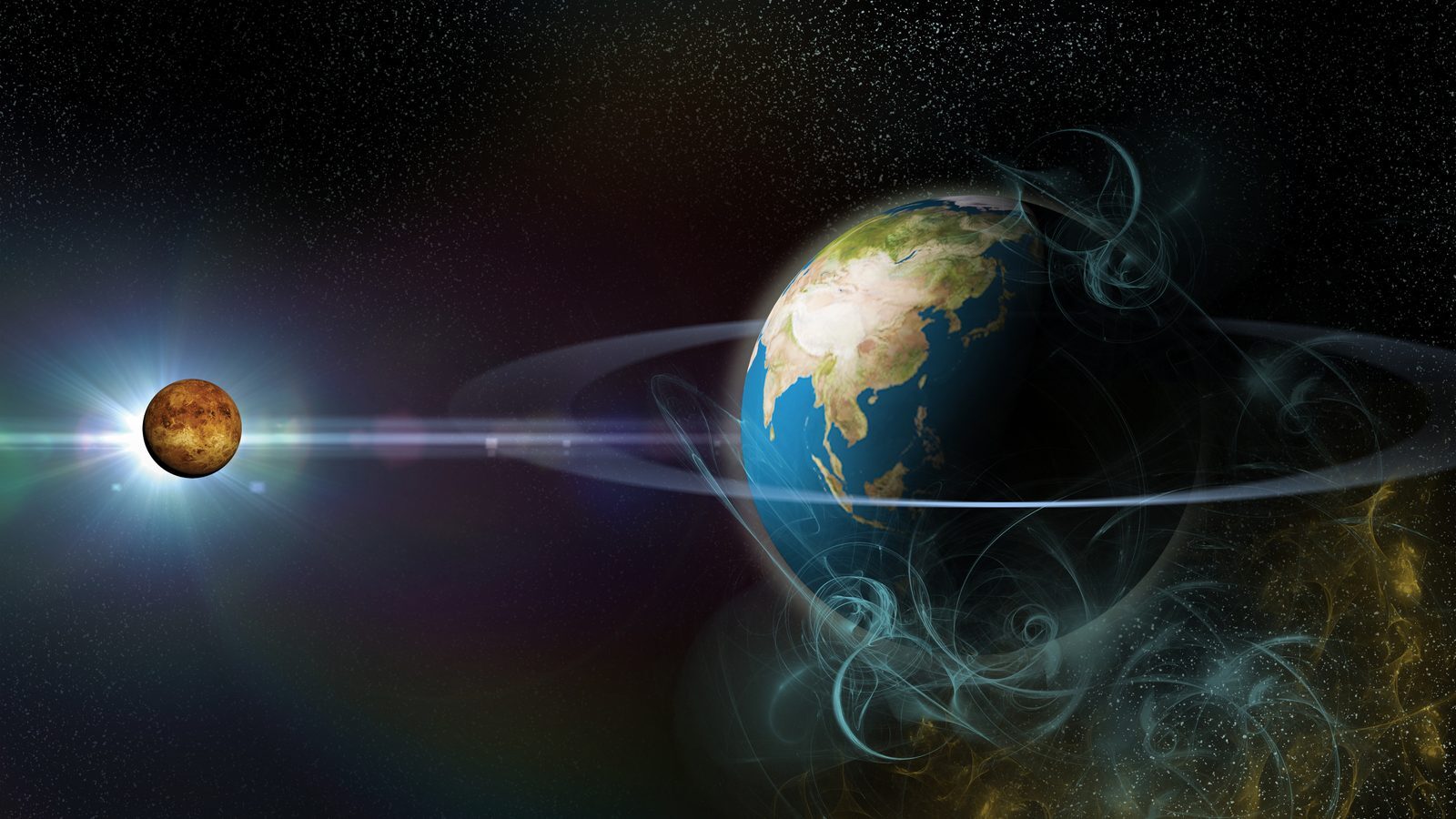
In another paper, Vladimir Airapetian, a scientist at NASA’s Goddard Space Flight Center in Greenbelt, Maryland, focuses on a long-standing mystery of how the ancient Sun warmed early Earth enough to sustain life. Three billion years ago, the young Sun was 70% as bright as it is today. Under these dimmer conditions, Earth should have been frozen solid. Yet geological evidence shows stable liquid water already existed long before that. This puzzle — a balmy Earth under a cooler, dimmer Sun — is known as the Faint Young Sun paradox.  

One clue to resolving the paradox comes from young Sun-like stars elsewhere in the galaxy. These “toddler” stars are prone to throwing fits. Specifically, data from NASA’s retired Kepler space telescope shows that young Sun-like stars regularly erupt with massive superflares, flinging high-energy particles in all directions on a daily basis. If our young Sun was like these other stars, Airapetian proposes, the barrage of high-energy solar particles could have triggered chemical reactions that were key to warming early Earth. 

Airapetian’s team simulated early Earth’s atmosphere in a sealed chamber, mixing molecular nitrogen, ammonia, carbon dioxide, and carbon monoxide. They then fired protons into the mixture, simulating the onslaught of particles from superflares. This proton bombardment triggered several changes including the production of nitrous oxide, a greenhouse gas 300 times more potent than carbon dioxide. The research was published in Astrophysical Journal Letters.

This nitrous oxide could help Earth hold onto heat. But not all the nitrous oxide would last. The young Sun’s intense ultraviolet radiation would break some of it down, splitting the molecule back into nitrogen and oxygen. But even if only 10% of the nitrous observed in the experiment survived, Airapetian’s team’s computer simulations confirmed, it would still warm Earth’s equatorial regions to about 41 degrees Fahrenheit (5 degrees Celsius), above water’s freezing point. This smaller amount of nitrous could even accelerate prebiotic synthesis: just-above-freezing temperatures have been found to be more efficient for building complex chains of amino acids than warmer temperatures. 

Unearthing secrets of our star-planet system 

Together, these two studies show that the Sun can lead to surprising implications for Earth. While our planet stands alone in many ways, it was formed and has always existed as part of a star-planet system. Understanding that unique relationship promises new insights about both Earth and the star that sustains it.  

By Desiree Apodaca and Miles Hatfield 
NASA’s Goddard Space Flight Center, Greenbelt, Md. 

Share

Details

Last Updated

Aug 24, 2026

Related Terms

  • The Solar System
  • Climate Modeling
  • Earth
  • Earth Science
  • Goddard Space Flight Center
  • Heliophysics
  • Heliophysics Division
  • Heliophysics Research Program
  • Heliosphere
  • Kepler / K2
  • Science Mission Directorate
  • The Sun

Explore More

5 min read

What Lake Bonneville Left Behind

The drying of the massive lake exposed playas that became the setting for feats of…

Article


20 hours ago

3 min read

NASA Shares Views of August Solar Eclipse from Ground, Air, Space

Article


3 days ago

6 min read

Europe’s Scorching Summer

A series of heat waves in 2026 is breaking records and taking a toll in…

Article


4 days ago

Keep Exploring

Discover More Topics From NASA

Galaxies


Earth


The Sun


Solar System


Source: Goddard Space Flight Center – NASA

Source: Goddard Space Flight Center – NASA. Review credited third-party material before publication.

Filed under: Science & Space — NASA — Centers & Facilities

Post navigation

Previous: MAIA Air Sensor at Work in Addis Ababa
Next: Perseverance Captures Another Phobos Transit

More from Science & Space — NASA — Centers & Facilities

Science & Space — NASA — Centers & Facilities

How 2 US, European Satellites Are Studying Hurricanes During El Niño

Published September 9, 2026 · 5 min read
Science & Space — NASA — Centers & Facilities

NASA’s Hubble, Webb Find Far-out Solar System Objects ‘Remember’ Past

Published September 8, 2026 · 5 min read
Science & Space — NASA — Centers & Facilities

NASA Rocket Takes First Multi-Point Look Inside Radio-Disrupting Clouds

Published September 2, 2026 · 5 min read
Science & Space — NASA — Centers & Facilities

NASA’s Dark Universe-Seeking Nancy Grace Roman Space Telescope Launches

Published August 30, 2026 · 5 min read
Science & Space — NASA — Centers & Facilities

NASA Astronaut Jonny Kim Departs Agency to Continue Military Service

Published August 27, 2026 · 4 min read
Science & Space — NASA — Centers & Facilities

NASA Ames’ Contributions to Roman’s Mission

Published August 25, 2026 · 6 min read
Science & Space — NASA — Centers & Facilities

NASA Ames Experts Available for Roman Space Telescope Interviews 

Published August 25, 2026 · 2 min read
Science & Space — NASA — Centers & Facilities

NASA’s Pandora Mission Begins Study of Exoplanets, Host Stars

Published August 25, 2026 · 5 min read
Science & Space — NASA — Centers & Facilities

Galactic Gems Glisten in New Gallery From NASA’s Chandra

Published August 25, 2026 · 12 min read
Science & Space — NASA — Centers & Facilities

NASA Data Feeds River Forecasts as Snow Drought Effects Linger

Published August 20, 2026 · 6 min read
Science & Space — NASA — Centers & Facilities

Human-Related Microbes May Survive Moon’s South Pole, NASA Finds

Published August 19, 2026 · 6 min read
Science & Space — NASA — Centers & Facilities

NASA’s LRO Images Falcon 9 Crater on Moon, Learns New Details

Published August 18, 2026 · 5 min read
Science & Space — NASA — Centers & Facilities

NASA Glenn’s Legacy Forged Through Decades of Flight Research

Published August 18, 2026 · 7 min read
Science & Space — NASA — Centers & Facilities

NASA Challenge Tests Wheel Designs for Moon Base Mobility

Published August 17, 2026 · 5 min read
Science & Space — NASA — Centers & Facilities

Hubble Solves Merger Mystery From Milky Way’s Early Years

Published August 17, 2026 · 6 min read
Science & Space — NASA — Centers & Facilities

NASA’s COFFIES Uses AI to Predict Storm-Causing Active Regions on Sun 

Published August 14, 2026 · 7 min read
Science & Space — NASA — Centers & Facilities

For West Virginia Engineer, Home Is Where the Heart Is… and NASA, Too

Published August 13, 2026 · 5 min read
Science & Space — NASA — Centers & Facilities

NASA Upgrades Vertical Motion Simulator for Modern Mission Needs

Published August 12, 2026 · 3 min read
Science & Space — NASA — Centers & Facilities

NASA Completes Astronaut-Deployed Science Instrument for Lunar Surface

Published August 11, 2026 · 6 min read
Science & Space — NASA — Centers & Facilities

Lion Nebula Roars to Life With NASA’s Webb

Published August 10, 2026 · 5 min read
Science & Space — NASA — Centers & Facilities

NASA’s Lunar Development and Test Facility Prepares Artemis Hardware for Moon 

Published August 7, 2026 · 3 min read
Science & Space — NASA — Centers & Facilities

NASA’s Perseverance Rover Watches Earth Vanish Behind Martian Moon

Published August 5, 2026 · 5 min read
Science & Space — NASA — Centers & Facilities

NASA Will Attempt to Observe Rocket Part’s Lunar Impact

Published August 4, 2026 · 3 min read
Science & Space — NASA — Centers & Facilities

NASA’s PUNCH Sharpens Solar Storm Forecasting in First Test

Published August 4, 2026 · 4 min read
Science & Space — NASA — Centers & Facilities

NASA Provides Updates on Moon Base Cargo Landers, Tech Demonstrations

Published August 4, 2026 · 7 min read
Science & Space — NASA — Centers & Facilities

Louisiana Students Loft Payloads from NASA Balloon Facility in Texas

Published August 3, 2026 · 4 min read
Science & Space — NASA — Centers & Facilities

NASA Awards Contract for Construction Services in California

Published August 3, 2026 · 2 min read
Science & Space — NASA — Centers & Facilities

NASA Pushes New Wing Design to Find Structural Limits

Published August 3, 2026 · 4 min read
Science & Space — NASA — Centers & Facilities

NASA Uses Subscale Aircraft to Accelerate Flight Innovation

Published August 3, 2026 · 5 min read
Science & Space — NASA — Centers & Facilities

NASA Jets Turn Red, White, and Blue

Published August 3, 2026 · 3 min read
Science & Space — NASA — Centers & Facilities

NASA Study Points to Smoother Air Taxi Rides

Published August 3, 2026 · 3 min read
Science & Space — NASA — Centers & Facilities

NASA Photographer Captures Images from F-18 Over Washington

Published August 3, 2026 · 3 min read
Science & Space — NASA — Centers & Facilities

A Day of Flight Testing at NASA Armstrong

Published August 3, 2026 · 5 min read
Science & Space — NASA — Centers & Facilities

This is How NASA Flight Tests New Technology

Published August 3, 2026 · 4 min read
Science & Space — NASA — Centers & Facilities

NASA’s Experimental Fabrication Branch Fuels Aircraft Innovation

Published August 3, 2026 · 3 min read
Science & Space — NASA — Centers & Facilities

NASA, USGS Scientists Go Rock Hounding in California’s High Desert

Published August 3, 2026 · 5 min read
Science & Space — NASA — Centers & Facilities

NASA, SpaceX Advance Wind Tunnel Tests for Starship Rocket 

Published August 3, 2026 · 5 min read
Science & Space — NASA — Centers & Facilities

NASA to Host Florida Event Celebrating American Air, Space Leadership

Published July 31, 2026 · 2 min read
Science & Space — NASA — Centers & Facilities

NASA Awards 2026 Innovative Technology Concepts

Published July 29, 2026 · 4 min read
Science & Space — NASA — Centers & Facilities

NASA Sets Coverage for August Northern Hemisphere Total Solar Eclipse

Published July 29, 2026 · 2 min read

Search

Recent Posts
  • Gasoline and diesel prices soar in Germany | DW News
  • NASA Ames Stars of the Month: September 2026
  • Merz pledges fast fuel price relief for Germans | DW News
  • More ‘BAD S**T WILL HAPPEN’ if we don’t act: Naomi Klein & Astra Taylor EXPOSE ‘End Times Fascism’
  • ‘I have questions…’: Nicolle reacts to Kash Patel’s WEIRD defense of creepy new policy
  • CO Dem running for Congress: ‘They are ripping apart the American dream’
  • ‘The FBI would be investigating!’: Fmr. CIA officer exposes SEVERITY of Jared Kushner’s meddling
  • Booker FLAMES Kash Patel: ‘You are a MOCKERY!’
  • Senators HAMMER Kash Patel on FBI departures, Epstein probes, leadership | MS NOW Highlights
  • ‘NOT the people I interviewed’: Trump DEJECTED after conservative Supreme Court rules against him
Categories
  • Florida (110)
    • Jacksonville (20)
    • Miami (62)
    • Orlando (17)
    • Tampa (11)
  • Health (1)
  • New York (69)
    • New York City (69)
  • Science (65)
    • Health & Medical Research (10)
    • U.S. Geological Survey (16)
    • U.S. National Science Foundation (39)
  • Science & Space (206)
    • NASA — Centers & Facilities (57)
    • NASA — JPL & Near-Earth Objects (4)
    • NASA — News, Missions & Technology (114)
    • NASA — Photos & Visual Records (31)
  • Trump (477)
  • U.S. Civil Service (160)
    • Cabinet — Department of Agriculture (8)
    • Independent Agencies — Commodity Futures Trading Commission (17)
    • Independent Agencies — Consumer Financial Protection Bureau (10)
    • Independent Agencies — Consumer Product Safety Commission (22)
    • Independent Agencies — Equal Employment Opportunity Commission (32)
    • Independent Agencies — Federal Reserve Board (1)
    • Independent Agencies — Federal Trade Commission (26)
    • Independent Agencies — National Labor Relations Board (20)
    • Independent Agencies — Securities and Exchange Commission (24)
  • U.S. Government (11)
    • DOJ — National (7)
    • DOJ — U.S. Attorneys (5)
    • GAO — News & Analysis (27)
    • GAO — Reports & Decisions (88)
    • Department of Justice (10)
    • Government Accountability Office (1)
  • U.S. News (994)
  • U.S. Veterans (163)
    • Benefits (23)
    • Disabled Veterans (10)
    • Employment (10)
    • Health & Care (41)
    • News (79)
  • Washington (170)
    • Washington (87)
      • Seattle (57)
      • Spokane (30)
  • World News (800)

Recent Comments

No recent comments.

Archives
  • September 2026 (956)
  • August 2026 (1879)
  • July 2026 (15)
  • June 2026 (7)
  • May 2026 (1)
  • April 2026 (4)
  • March 2026 (1)
  • January 2026 (3)
  • November 2025 (1)
  • August 2025 (1)
  • July 2025 (1)
  • April 2025 (2)

Thirstier News is a service of Thirstier, a DBA of Immix Tachyon Synergy Network LLC.

© 2026 Thirstier. Thirstier Theme is an original theme from Thirstier.