Skip to content
Thirstier News November 5, 2026
Home
Thirstier News
  • ABC Live
  • Al Jazeera
  • CBS Live
  • Contact
  • France 24
  • Live News
  • NBC Live
Popular Tags
  • YouTube
  • U.S. News
  • World News
  • MS NOW
  • PBS NewsHour
  • Al Jazeera English
  • DW News
Science & Space — NASA — Centers & Facilities

How 2 US, European Satellites Are Studying Hurricanes During El Niño

Published September 9, 2026 · 5 min read
· By Thirstier News
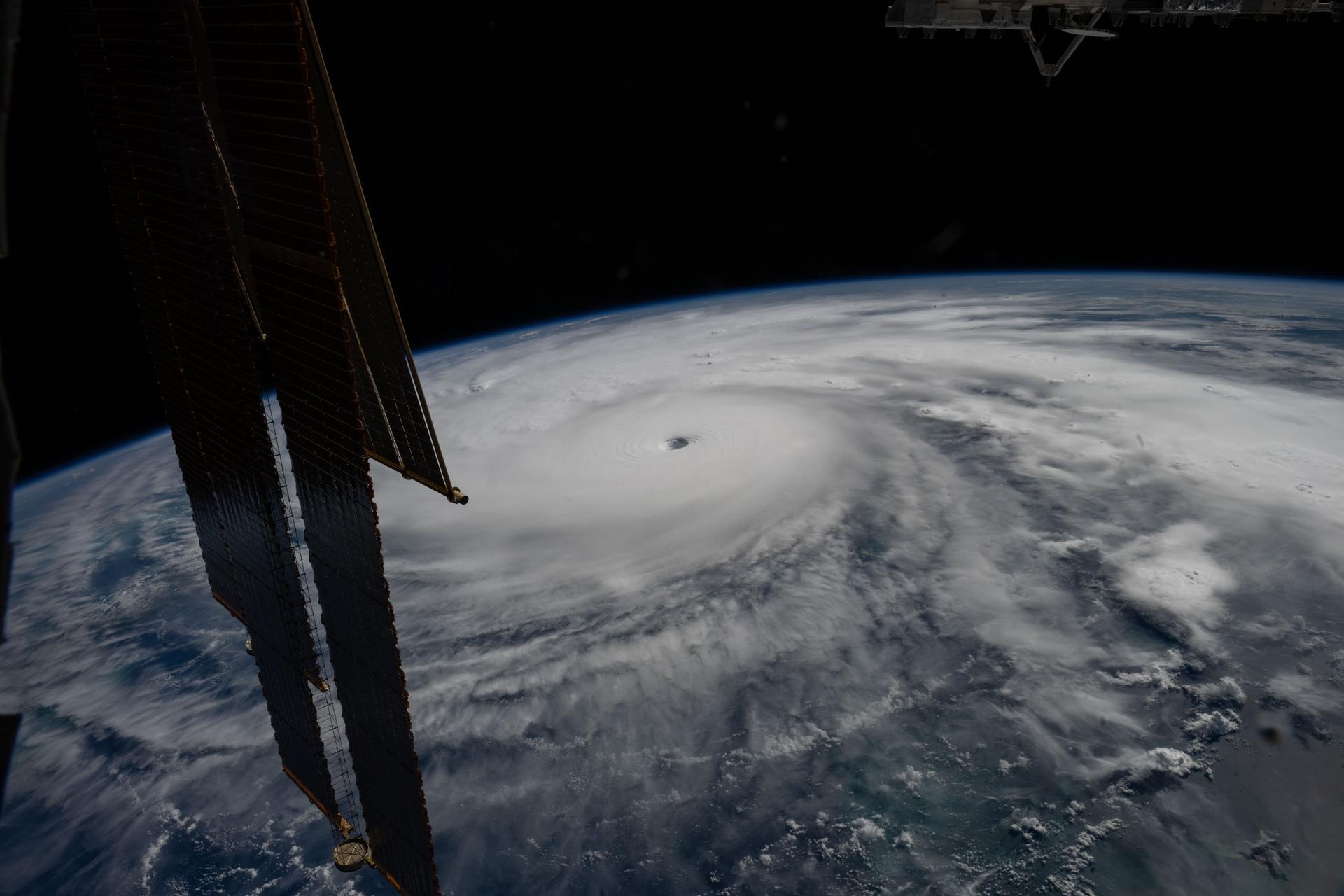
Hurricane Melissa is seen 50 miles south of Jamaica in this photograph taken from the International Space Station on Oct. 28, 2025.
NASA

Last November, NASA and its European partners launched the Sentinel-6B satellite to improve hurricane forecasts, help protect infrastructure, and benefit commercial industries, including shipping. The satellite now is flying 30 seconds behind its predecessor, Sentinel-6 Michael Freilich. Both satellites are providing precise sea level height measurements during what oceanographers expect to be a historic El Niño, a naturally occurring oceanic phenomenon in which warmer-than-usual Pacific waters shift global weather patterns.

The two satellites make up the Copernicus Sentinel-6/Jason-CS (Continuity of Service) mission, the latest in a series of ocean-observing radar altimetry missions that have been monitoring Earth’s changing seas continuously since the early 1990s.

The data each satellite is collecting will not only allow scientists to better understand this year’s El Niño but will also help them create more accurate hurricane predictions.

“This El Niño was a late-bloomer,” said Josh Willis, Sentinel-6B’s project scientist at NASA’s Jet Propulsion Laboratory in Southern California. “It didn’t kick off until the middle of the year and is just now reaching a strength similar to what we’ve seen in the satellite record during significant El Niños in 1997 and 2015. We expect it to be big, and it’s already having big impacts.”

El Niños generally scramble weather patterns tied to rainfall and storms, including hurricanes. They also redistribute heat in the ocean, which affects sea level. Normally, Earth’s warmest ocean waters sit along the equator in the western Pacific. During El Niño, weakened winds, which usually blow westward along the equator, result in heat spreading east toward South America. The change in ocean heat shifts hurricane activity from the Atlantic to the Pacific Ocean.

Predicting hurricane strength

On July 15, Sentinel-6B began delivering low-latency data to scientists that could be used for weather predictions. That data will take some time to work its way into the research models on which meteorologists and climate scientists rely, but when it does, those improved models could save lives.

Data from Sentinel-6 satellite missions feeds into hurricane tracking algorithms used by federal and state agencies. Those predictions can activate disaster response efforts, mobilizing resources ranging from sandbag placement to National Guard activation. They also can lead to evacuation orders that require quick but well-informed decisions about logistics at a local level. More severe events may require engaging larger organizations, such as the Federal Emergency Management Agency.

A tropical storm can take a week or more to become a hurricane and make its way to a coastline, but a hurricane can rapidly intensify in the 48 hours prior to landfall, leaving planners little time to prepare.

“Hurricanes have been known to speed up quickly at the last moment, so the window in which to decide what to do is short,” said Deirdre Byrne, an oceanographer and altimetry expert with the National Oceanic and Atmospheric Administration (NOAA). “The goal is to forecast how much and how rapidly intensification will happen so that officials can make the right calls.”

Byrne oversees one of the country’s most crucial hurricane forecasting algorithms, NOAA’s Satellite Ocean Heat Content Suite, which has been operating since 2012.

Each Sentinel-6 satellite measures ocean height, as well as the size of waves and marine wind speed, using a radar altimeter, which bounces thousands of radar pulses a second off the crests and troughs of waves. Ocean height varies from place to place and provides insight into the ocean’s heat content, since warm water expands. That, in turn, helps forecast how fast hurricanes will grow.

The satellites each carry a second instrument, called the Global Navigation Satellite System – Radio Occultation (GNSS-RO), which measures atmospheric properties, such as humidity, pressure, and temperature.

Among the measurements Sentinel-6 is gathering, Byrne is most anticipating the ocean height data, which she plans to begin incorporating into the current Satellite Ocean Heat Content Suite algorithm by the end of the year.

“In terms of data quality, the Sentinel-6 missions are unparalleled,” Byrne said.

Together, the missions are also extending a precise dataset deep into its fourth decade. This record of sea level observations traces back to the TOPEX/Poseidon mission, which launched in 1992, and continues through to the present day with Sentinel-6 Michael Freilich. Sentinel-6B will take over for its predecessor as the reference satellite for global sea level measurements later this year.

“The key is consistency, measuring the same way, every time,” said Severine Fournier, Sentinel-6B deputy project scientist, JPL. “That’s what lets us predict hurricanes, and, in turn, protect coastal communities and infrastructure.”

More about Sentinel-6B

Sentinel-6 Michael Freilich, named after a former director of NASA’s Earth Science Division, is one of two satellites that compose the Copernicus Sentinel-6/Jason-CS mission.

Sentinel-6/Jason-CS, a part of the European Union’s Earth observation program called Copernicus, was jointly developed by ESA (European Space Agency), EUMETSAT (European Organisation for the Exploitation of Meteorological Satellites), NASA, and NOAA, with funding support from the European Commission and technical support on performance from the French space agency CNES (Centre National d’Études Spatiales). Spacecraft monitoring and control, as well as the processing of all the altimeter science data, is carried out by EUMETSAT on behalf of the European Union’s Copernicus Programme, with the support of all partner agencies.

NASA JPL, a division of Caltech in Pasadena, contributed three science instruments for each Sentinel-6 satellite: the Advanced Microwave Radiometer, the GNSS-RO, and the Laser Retroreflector Array. NASA also contributed launch services, ground systems supporting operation of the agency’s science instruments, the science data processors for two of these instruments, and support for the United States members of the international Ocean Surface Topography Science Team.

For more about Sentinel-6B, visit:

https://science.nasa.gov/mission/sentinel-6B

-end-

Media Contacts

Andrew Good / Andrew Wang
Jet Propulsion Laboratory, Pasadena, Calif.
818-393-2433 / 626-379-6874
andrew.c.good@jpl.nasa.gov / andrew.wang@jpl.nasa.gov

2026-060


Source: Jet Propulsion Laboratory – NASA

Filed under: Science & Space — NASA — Centers & Facilities

Post navigation

Previous: DOD Installation Services: Action Needed to Improve Oversight of Intergovernmental Support Agreements
Next: The secret story behind the UN peace bell – Khalilur Rahman, UNPGA

More from Science & Space — NASA — Centers & Facilities

Science & Space — NASA — Centers & Facilities

NASA’s Hubble Spies Spiral’s Edge

Published October 16, 2026 · 2 min read
Science & Space — NASA — Centers & Facilities

Rigorous Analysis Confirms NASA’s Artemis II Heat Shield Performance 

Published October 15, 2026 · 6 min read
Science & Space — NASA — Centers & Facilities

NASA Develops Batteries to Power Humanity’s Return to Moon

Published October 14, 2026 · 5 min read
Science & Space — NASA — Centers & Facilities

NASA to Conduct Flyover, Engage NFL Fans at MetLife Stadium

Published October 10, 2026 · 2 min read
Science & Space — NASA — Centers & Facilities

NASA’s SSPICY Mission to Demonstrate In-Space Inspection Technologies

Published October 8, 2026 · 3 min read
Science & Space — NASA — Centers & Facilities

NASA’s SPHEREx Telescope Sees Menagerie of Brown Dwarfs

Published October 8, 2026 · 5 min read
Science & Space — NASA — Centers & Facilities

Webb Measures Distance to Farthest Fast Radio Burst, Suggesting Origin

Published October 8, 2026 · 5 min read
Science & Space — NASA — Centers & Facilities

NASA Advances LISA Mission Contributions With New Test Telescope

Published October 8, 2026 · 4 min read
Science & Space — NASA — Centers & Facilities

NASA Glenn Invites Phase 1 Proposals for Aerospace Power Systems Laboratory

Published October 6, 2026 · 2 min read
Science & Space — NASA — Centers & Facilities

Suspected Second-generation Planet Solves NASA Hubble Cold Case

Published October 5, 2026 · 5 min read
Science & Space — NASA — Centers & Facilities

NASA Campaign Explores Clouds Spawned by Wildfires

Published October 2, 2026 · 7 min read
Science & Space — NASA — Centers & Facilities

NASA Awards Enterprise Logistics Support Services Agreements

Published October 1, 2026 · 2 min read
Science & Space — NASA — Centers & Facilities

NASA Awards Contract to Develop 5G Communications for Moon

Published September 30, 2026 · 1 min read
Science & Space — NASA — Centers & Facilities

NASA Adds Blue Origin New Glenn 9×4 to Launch Services Contract

Published September 29, 2026 · 1 min read
Science & Space — NASA — Centers & Facilities

NASA Highlights Lessons Learned From Swift Boost Mission

Published September 28, 2026 · 6 min read
Science & Space — NASA — Centers & Facilities

Meet NASA’s Artemis II Crew During Houston Public Event

Published September 28, 2026 · 2 min read
Science & Space — NASA — Centers & Facilities

Reliable Robots: Meet Johnson’s Dexterous Robotics Team

Published September 28, 2026 · 5 min read
Science & Space — NASA — Centers & Facilities

Uncovering the Valleys Hidden Below Greenland’s Ice

Published September 28, 2026 · 4 min read
Science & Space — NASA — Centers & Facilities

NASA Tests Dual Mode Propulsion CubeSat Ahead of Launch

Published September 25, 2026 · 4 min read
Science & Space — NASA — Centers & Facilities

NASA Unveils Winning Designs for Mars Space Food Systems Challenge 

Published September 24, 2026 · 4 min read
Science & Space — NASA — Centers & Facilities

US-India Satellite Captures Time-lapse Video of Volcanic Eruption

Published September 24, 2026 · 5 min read
Science & Space — NASA — Centers & Facilities

NASA Aircraft to Make Low-Altitude Research Flights Over Colorado

Published September 23, 2026 · 2 min read
Science & Space — NASA — Centers & Facilities

NASA’s Hubble Seeks Lensed Supernova, Marks 200,000 Orbits

Published September 23, 2026 · 2 min read
Science & Space — NASA — Centers & Facilities

Johnson Space Center Sparks Curiosity at Houston’s 33rd Annual Japan Festival  

Published September 21, 2026 · 3 min read
Science & Space — NASA — Centers & Facilities

NASA’s Moon Orbiter Spots New, ‘Once-in-Century’ Moon Crater

Published September 16, 2026 · 4 min read
Science & Space — NASA — Centers & Facilities

NASA’s Hubble, Webb Find Far-out Solar System Objects ‘Remember’ Past

Published September 8, 2026 · 5 min read
Science & Space — NASA — Centers & Facilities

NASA Rocket Takes First Multi-Point Look Inside Radio-Disrupting Clouds

Published September 2, 2026 · 5 min read
Science & Space — NASA — Centers & Facilities

NASA’s Dark Universe-Seeking Nancy Grace Roman Space Telescope Launches

Published August 30, 2026 · 5 min read
Science & Space — NASA — Centers & Facilities

NASA Astronaut Jonny Kim Departs Agency to Continue Military Service

Published August 27, 2026 · 4 min read
Science & Space — NASA — Centers & Facilities

NASA Ames’ Contributions to Roman’s Mission

Published August 25, 2026 · 6 min read
Science & Space — NASA — Centers & Facilities

NASA Ames Experts Available for Roman Space Telescope Interviews 

Published August 25, 2026 · 2 min read
Science & Space — NASA — Centers & Facilities

NASA’s Pandora Mission Begins Study of Exoplanets, Host Stars

Published August 25, 2026 · 5 min read
Science & Space — NASA — Centers & Facilities

Galactic Gems Glisten in New Gallery From NASA’s Chandra

Published August 25, 2026 · 12 min read
Science & Space — NASA — Centers & Facilities

Starstruck: NASA Research Shows How Sun’s Ancient History Shaped Earth

Published August 24, 2026 · 7 min read
Science & Space — NASA — Centers & Facilities

NASA Data Feeds River Forecasts as Snow Drought Effects Linger

Published August 20, 2026 · 6 min read
Science & Space — NASA — Centers & Facilities

Human-Related Microbes May Survive Moon’s South Pole, NASA Finds

Published August 19, 2026 · 6 min read
Science & Space — NASA — Centers & Facilities

NASA’s LRO Images Falcon 9 Crater on Moon, Learns New Details

Published August 18, 2026 · 5 min read
Science & Space — NASA — Centers & Facilities

NASA Glenn’s Legacy Forged Through Decades of Flight Research

Published August 18, 2026 · 7 min read
Science & Space — NASA — Centers & Facilities

NASA Challenge Tests Wheel Designs for Moon Base Mobility

Published August 17, 2026 · 5 min read
Science & Space — NASA — Centers & Facilities

Hubble Solves Merger Mystery From Milky Way’s Early Years

Published August 17, 2026 · 6 min read

Search

Recent Posts
  • Why Trump’s midterm blues mean short-term gain, long-term pain for China
  • Shipping crews caught in the crossfire of the Hormuz conflict | DW News
  • LIVE: French students, workers, pensioners protest in Marseille
  • LIVE: Protests in France as trade unions hold nationwide strikes
  • Joshua Wong’s friend says jailed Hong Kong activist reading books, learning guitar inside prison
  • Blue wave sets up possible IMPEACHMENT of Trump’s attorney general, Todd Blanche
  • Over 300,000 tarantulas seized in Peru | DW News
  • The Last Word with Lawrence O’Donnell – Nov. 4 | Audio Only
  • Vance blames Iran war for GOP midterms loss, Trump brags about WH ballroom | MS NOW Highlights
  • Hope and faith in the American dream behind blue surge in Latino vote in Texas
Categories
  • Florida (110)
    • Jacksonville (20)
    • Miami (62)
    • Orlando (17)
    • Tampa (11)
  • Health (1)
  • New York (69)
    • New York City (69)
  • Science (85)
    • Health & Medical Research (10)
    • U.S. Geological Survey (18)
    • U.S. National Science Foundation (57)
  • Science & Space (364)
    • NASA — Centers & Facilities (82)
    • NASA — JPL & Near-Earth Objects (4)
    • NASA — News, Missions & Technology (242)
    • NASA — Photos & Visual Records (36)
  • Trump (1146)
  • U.S. Civil Service (245)
    • Cabinet — Department of Agriculture (8)
    • Independent Agencies — Commodity Futures Trading Commission (19)
    • Independent Agencies — Consumer Financial Protection Bureau (12)
    • Independent Agencies — Consumer Product Safety Commission (32)
    • Independent Agencies — Equal Employment Opportunity Commission (64)
    • Independent Agencies — Federal Reserve Board (1)
    • Independent Agencies — Federal Trade Commission (46)
    • Independent Agencies — National Labor Relations Board (22)
    • Independent Agencies — Securities and Exchange Commission (41)
  • U.S. Government (11)
    • DOJ — National (8)
    • DOJ — U.S. Attorneys (10)
    • GAO — News & Analysis (43)
    • GAO — Reports & Decisions (158)
    • Department of Justice (10)
    • Government Accountability Office (1)
  • U.S. News (2483)
  • U.S. Veterans (255)
    • Benefits (25)
    • Disabled Veterans (10)
    • Employment (10)
    • Health & Care (64)
    • News (146)
  • Washington (233)
    • Washington (87)
      • Seattle (57)
      • Spokane (30)
  • World News (1942)

Recent Comments

No recent comments.

Archives
  • November 2026 (218)
  • October 2026 (1794)
  • September 2026 (2072)
  • August 2026 (1879)
  • July 2026 (17)
  • June 2026 (8)
  • May 2026 (1)
  • April 2026 (6)
  • March 2026 (1)
  • January 2026 (3)
  • December 2025 (1)
  • November 2025 (1)

Thirstier News is a service of Thirstier, a DBA of Immix Tachyon Synergy Network LLC.

© 2026 Thirstier. Thirstier Theme is an original theme from Thirstier.