
Skip to content
Thirstier News September 16, 2026
Home
Thirstier News
  • ABC Live
  • Al Jazeera
  • CBS Live
  • Contact
  • France 24
  • Live News
  • NBC Live
Popular Tags
  • YouTube
  • U.S. News
  • World News
  • MS NOW
  • PBS NewsHour
  • Al Jazeera English
  • DW News
Science & Space — NASA — Centers & Facilities

Partners, NASA Ready for June Launch of Swift Boost Mission

Published June 26, 2026 · 6 min read
· By Thirstier News

5 min read

Partners, NASA Ready for June Launch of Swift Boost Mission

Jeanette Kazmierczak

Jun 26, 2026
Article
NASA is on a mission to lift its Neil Gehrels Swift Observatory along with partners Katalyst Space and Northrop Grumman. Watch to get a sneak peek.
Credit: NASA’s Goddard Space Flight Center/Katalyst Space/Northrop Grumman

Editor’s note, July 3, 2026: The mission launched successfully Friday, July 3, at 8:36 p.m. UTC+12 (4:36 a.m. EDT).

Editor’s note, July 2, 2026: Thursday’s launch attempt was postponed due to a launch vehicle issue. The next launch attempt is no earlier than Friday, July 3, 8:35 p.m. UTC+12 (4:35 a.m. EDT).

Editor’s note, July 1, 2026: Wednesday’s launch was postponed due to unfavorable weather conditions. The next launch attempt is no earlier than Thursday, July 2, at 9:09 p.m. UTC+12 (5:09 a.m. EDT).

Editor’s note, June 30, 2026: Tuesday’s launch was postponed due to unfavorable weather conditions. The next launch attempt is no earlier than Wednesday, July 1, at 9:43 p.m. UTC+12 (5:43 a.m. EDT).

Editor’s note, June 29, 2026: The no-earlier-than launch time for June 30 has shifted from 6:23 a.m. to 6:17 a.m. EDT (10:23 p.m. to 10:17 p.m. local time in Kwajalein).

A mission to raise the orbit of NASA’s Neil Gehrels Swift Observatory is poised for launch no earlier than Friday, July 3, 4:35 a.m. EDT (8:35 p.m. UTC+12), from Kwajalein Atoll, part of the Republic of the Marshall Islands in the South Pacific Ocean.

A robotic servicing satellite called LINK, built by Katalyst Space, will blast into orbit on a Northrop Grumman Pegasus XL rocket. LINK will rendezvous with, grapple, and slowly raise Swift’s altitude over several months, preventing it from re-entering Earth’s atmosphere later this year.

“Swift is NASA’s multitool when it comes to studying the cosmos,” said S. Bradley Cenko, principal investigator, Swift, NASA’s Goddard Space Flight Center in Greenbelt, Maryland. “It observes the sky using a wide range of light and rapidly points at short-lived outbursts, alerting other facilities in space and on the ground to help coordinate follow-up observations. For the last two decades, Swift has been a key player in NASA’s efforts to understand how the universe works, and we’re looking forward to getting back to that work after the boost is complete.”

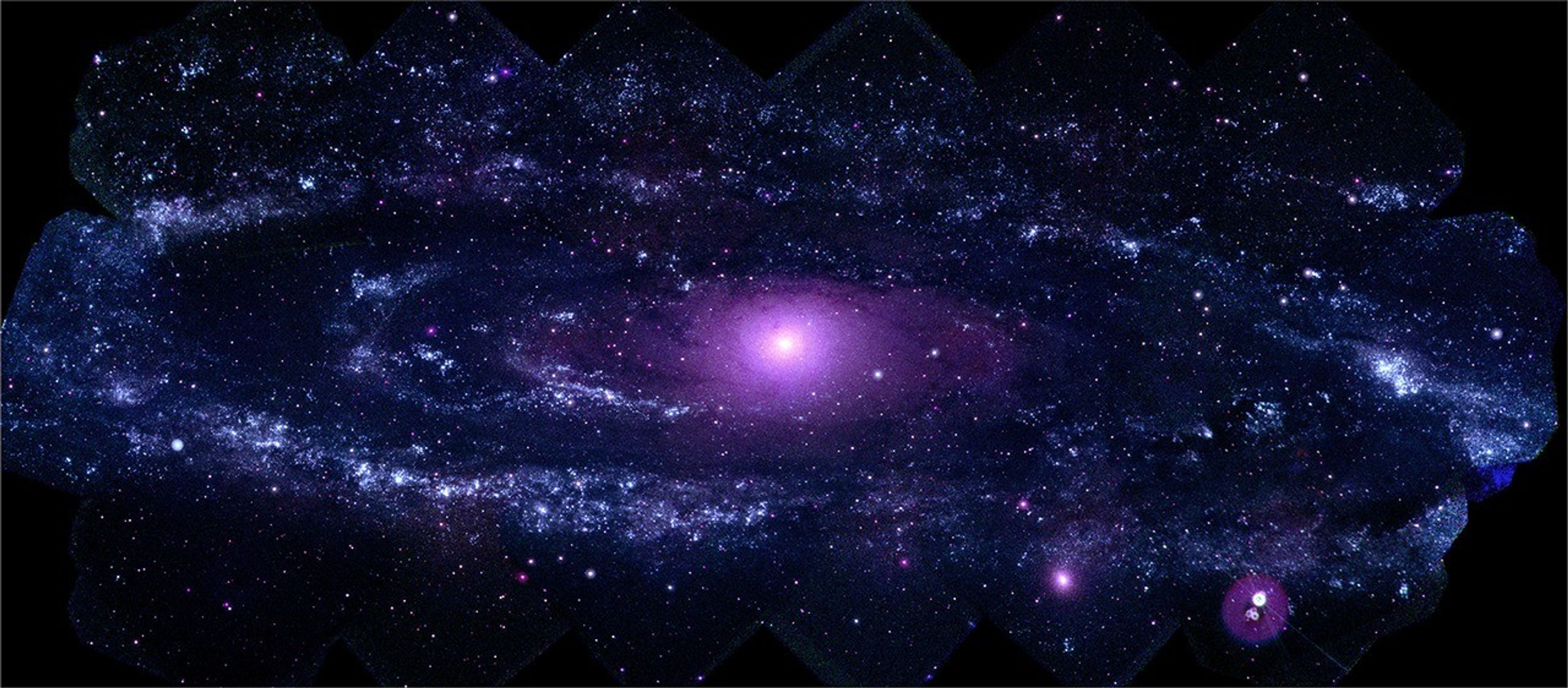
This mosaic of M31 merges 330 individual images taken by the Ultraviolet/Optical Telescope aboard Swift. It is the highest-resolution image of the galaxy ever recorded in the ultraviolet. The image shows a region 200,000 light-years wide and 100,000 light-years high.
NASA/Swift/Stefan Immler (GSFC) and Erin Grand (UMCP)

Download high-resolution images and videos related to Swift through NASA’s Scientific Visualization Studio.

Our planet’s atmosphere creates drag on all spacecraft in low Earth orbit, gradually reducing their altitudes if they don’t have propulsion systems to counteract the effect.

A recent bout of increased solar activity magnified this impact on Swift, which launched in November 2004.

Rather than allowing Swift to re-enter the atmosphere as many missions do, NASA is using the opportunity to advance the U.S. commercial satellite servicing industry.

In September, the agency contracted Katalyst to attempt to boost the observatory. The company would have less than one year to design, build, test, and launch a satellite to meet, grab, and lift Swift to nearly its original orbit.

“Swift wasn’t designed to be serviced,” said Ghonhee Lee, CEO of Katalyst. “By demonstrating we can quickly and cost-effectively extend its lifetime, we’re creating a blueprint for servicing spacecraft that were never designed for on-orbit maintenance. If we’re going to build an enduring presence beyond Earth, we need the capability to manipulate our environment in space. That means deploying robotic spacecraft that can reposition, repair, refuel, and refit satellites after launch.”

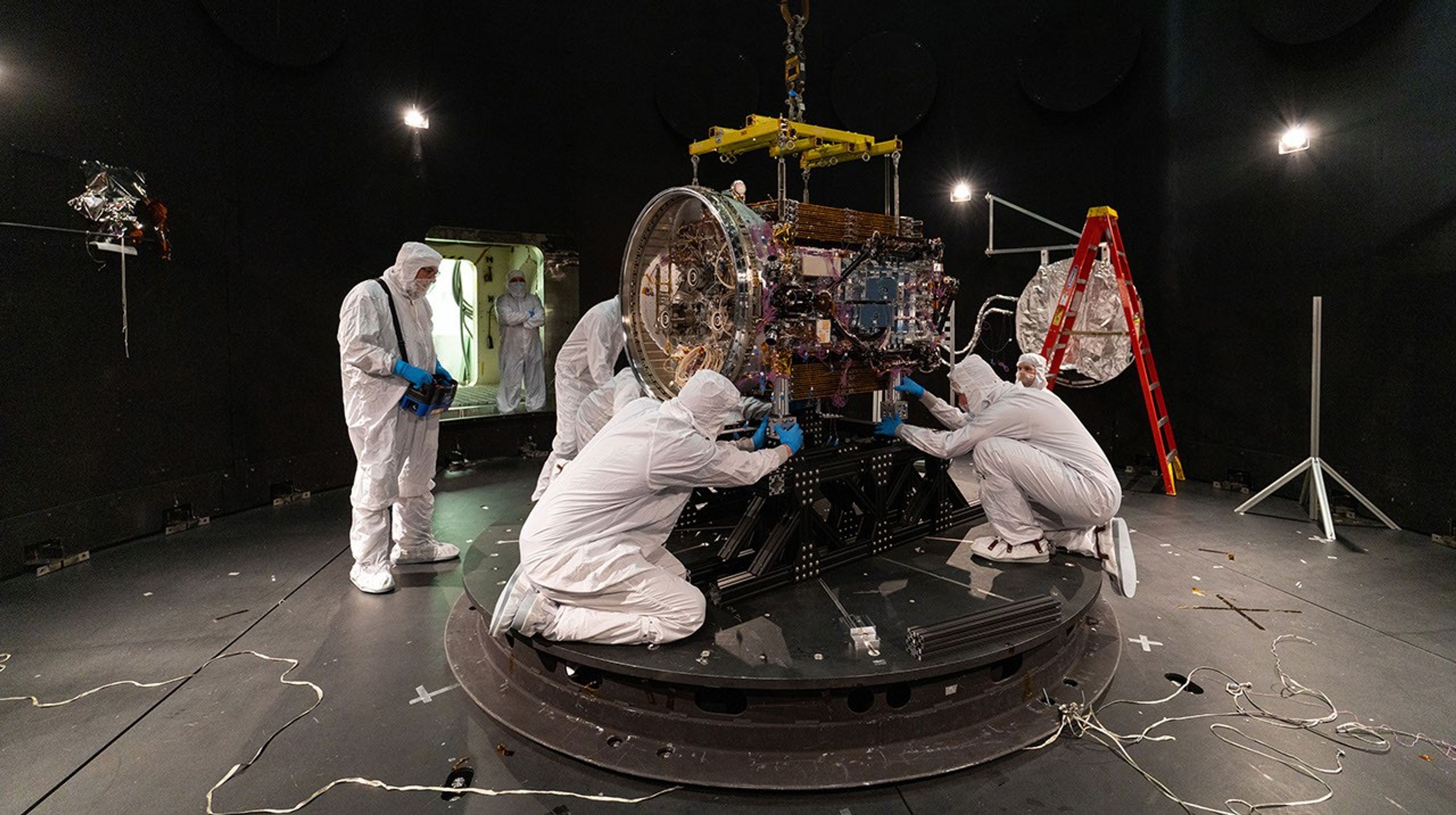
Katalyst engineers attach LINK to a baseplate inside the Space Environment Simulator at NASA Goddard on Tuesday, April 28, 2026. Once all the air was pumped out of the 27-foot-diameter chamber, the team practiced firing the satellite’s ion thrusters and operated one of the robotic arms while they cycled through space-like hot and cold temperatures.
NASA/Sophia Roberts

The LINK spacecraft weighs about 880 pounds and stands about 5 feet tall, about a third of Swift’s overall size. Nearly 20 feet of solar panels will power three ion thrusters and a trio of robotic arms.

LINK completed environmental testing that mimicked launch and space-like conditions at NASA Goddard this spring, as well as additional preflight assessments at Katalyst’s facility in Broomfield, Colorado.

For the boost to have its best chance of success, Swift needs to stay above an altitude of about 185 miles.

By the end of last year, however, orbital predictions generated by NASA showed the observatory reaching that threshold as early as July.

To slow Swift’s descent, the operations team at Penn State’s Eberly College of Science altered how they managed and oriented the spacecraft.

Unlike during normal operating procedures, where Swift looks at spots on the sky that are scientifically interesting, the team now selects targets that steer Swift into the most streamlined position. They also reduced power consumption as much as possible to place the satellite’s large solar panels in a more aerodynamic orientation.

Recent orbital predictions show these changes will keep Swift above critical altitude until this fall.

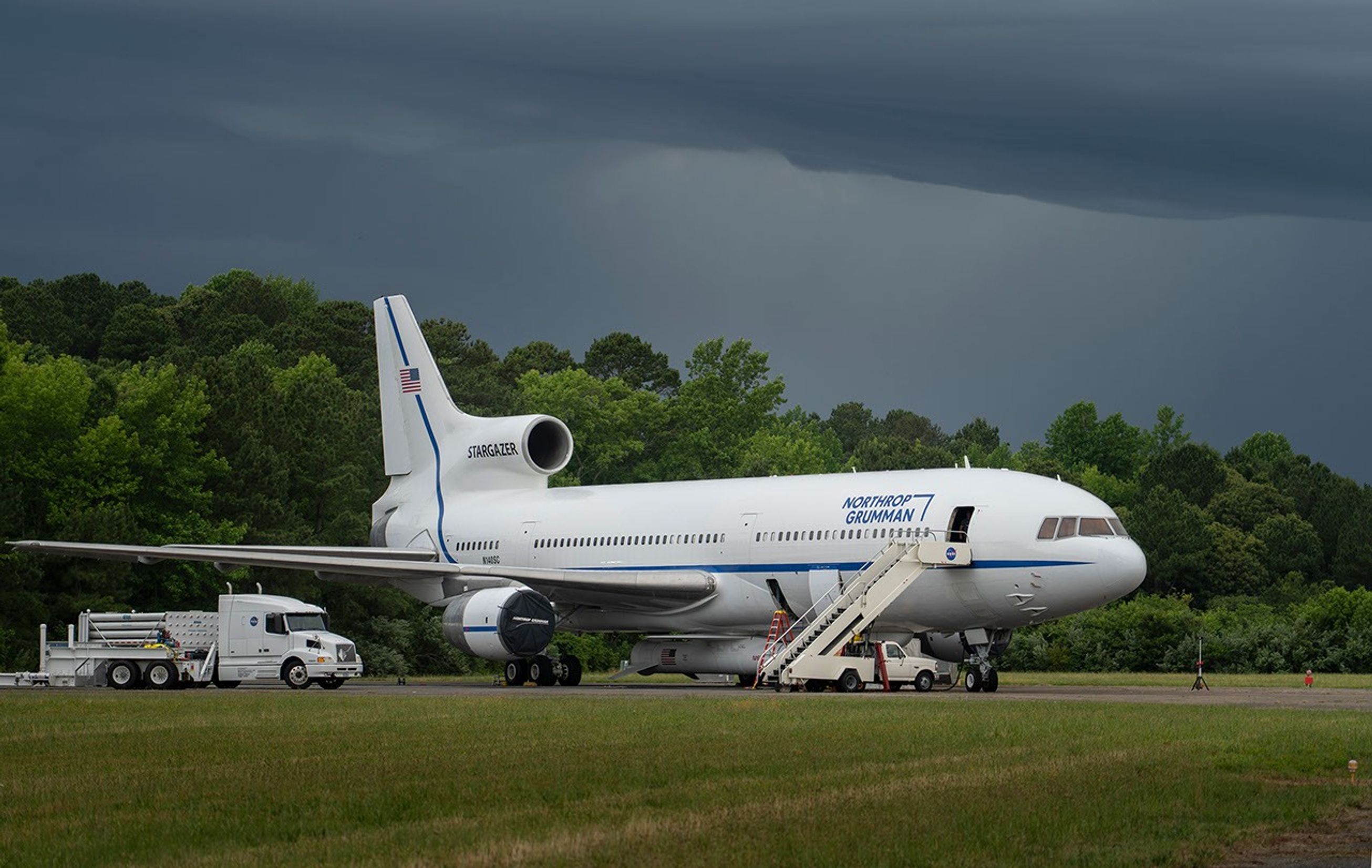
Stargazer, Pegasus XL, and LINK await takeoff on Wednesday, June 17, 2026, at NASA’s Wallops Flight Facility in Virginia. Engineers control the temperature and humidity inside the nose cone of the rocket to keep the satellite and avionics safe from weather and changing environmental conditions during flight.
NASA/Ron Beard

The satellite will launch aboard the Pegasus XL.

“We can deploy Pegasus from almost anywhere in the world using our Stargazer, a modified L-1011 aircraft,” said Wes Collier, vice president of launch systems at Northrop Grumman. “That combination of flexibility and responsive access to space will help LINK quickly reach Swift, giving the teams time to complete the boost.”

Earlier this month, engineers loaded LINK into the Pegasus XL and attached the rocket to Stargazer at NASA’s Wallops Flight Facility in Virginia. The aircraft and its payload departed for Kwajalein Atoll on Thursday, June 18, where it now awaits launch.

Once in orbit, LINK will undergo several weeks of commissioning as Katalyst evaluates the spacecraft’s propulsion, navigation, and sensor systems. It then will slowly approach and survey Swift before grabbing the observatory with its robotic arms and slowly raising the orbit to nearly 370 miles.

“This is a high-risk, high-reward mission,” said Shawn Domagal-Goldman, division director, Astrophysics, NASA Headquarters in Washington. “Swift plays a notable role in our fleet. We have much to gain by attempting this boost, which is more affordable than trying to replace Swift’s capabilities and allows NASA to advance the nation’s satellite servicing industry, for the benefit of all.”

Learn more about the Swift boost at:

https://science.nasa.gov/mission/swift/swift-boost-mission/

By Jeanette Kazmierczak
Goddard Space Flight Center, Greenbelt, Md.

Media contacts:
Alise Fisher
Headquarters, Washington
202-358-2546

Claire Andreoli
Goddard Space Flight Center, Greenbelt, Md.
301-286-1940

@NASAUniverse

@NASAUniverse

@NASAUniverse

Share

Details

Last Updated

Jul 03, 2026

Editor
Jeanette Kazmierczak
Location
Goddard Space Flight Center

Related Terms

  • Swift Boost Mission
  • Astrophysics
  • Goddard Space Flight Center
  • Neil Gehrels Swift Observatory
  • Robotics
  • The Universe
  • Wallops Flight Facility

Source: Wallops Flight Facility – NASA

Source: Wallops Flight Facility – NASA. Review credited third-party material before publication.
Filed under: Science & Space — NASA — Centers & Facilities

Post navigation

Previous: CFPB Announces Joint Final Rule on Adopting Uniform Standards for Reporting Financial Data
Next: NextSTEP-3 A: Lunar Enabling Technology

More from Science & Space — NASA — Centers & Facilities

Science & Space — NASA — Centers & Facilities

How 2 US, European Satellites Are Studying Hurricanes During El Niño

Published September 9, 2026 · 5 min read
Science & Space — NASA — Centers & Facilities

NASA’s Hubble, Webb Find Far-out Solar System Objects ‘Remember’ Past

Published September 8, 2026 · 5 min read
Science & Space — NASA — Centers & Facilities

NASA Rocket Takes First Multi-Point Look Inside Radio-Disrupting Clouds

Published September 2, 2026 · 5 min read
Science & Space — NASA — Centers & Facilities

NASA’s Dark Universe-Seeking Nancy Grace Roman Space Telescope Launches

Published August 30, 2026 · 5 min read
Science & Space — NASA — Centers & Facilities

NASA Astronaut Jonny Kim Departs Agency to Continue Military Service

Published August 27, 2026 · 4 min read
Science & Space — NASA — Centers & Facilities

NASA Ames’ Contributions to Roman’s Mission

Published August 25, 2026 · 6 min read
Science & Space — NASA — Centers & Facilities

NASA Ames Experts Available for Roman Space Telescope Interviews 

Published August 25, 2026 · 2 min read
Science & Space — NASA — Centers & Facilities

NASA’s Pandora Mission Begins Study of Exoplanets, Host Stars

Published August 25, 2026 · 5 min read
Science & Space — NASA — Centers & Facilities

Galactic Gems Glisten in New Gallery From NASA’s Chandra

Published August 25, 2026 · 12 min read
Science & Space — NASA — Centers & Facilities

Starstruck: NASA Research Shows How Sun’s Ancient History Shaped Earth

Published August 24, 2026 · 7 min read
Science & Space — NASA — Centers & Facilities

NASA Data Feeds River Forecasts as Snow Drought Effects Linger

Published August 20, 2026 · 6 min read
Science & Space — NASA — Centers & Facilities

Human-Related Microbes May Survive Moon’s South Pole, NASA Finds

Published August 19, 2026 · 6 min read
Science & Space — NASA — Centers & Facilities

NASA’s LRO Images Falcon 9 Crater on Moon, Learns New Details

Published August 18, 2026 · 5 min read
Science & Space — NASA — Centers & Facilities

NASA Glenn’s Legacy Forged Through Decades of Flight Research

Published August 18, 2026 · 7 min read
Science & Space — NASA — Centers & Facilities

NASA Challenge Tests Wheel Designs for Moon Base Mobility

Published August 17, 2026 · 5 min read
Science & Space — NASA — Centers & Facilities

Hubble Solves Merger Mystery From Milky Way’s Early Years

Published August 17, 2026 · 6 min read
Science & Space — NASA — Centers & Facilities

NASA’s COFFIES Uses AI to Predict Storm-Causing Active Regions on Sun 

Published August 14, 2026 · 7 min read
Science & Space — NASA — Centers & Facilities

For West Virginia Engineer, Home Is Where the Heart Is… and NASA, Too

Published August 13, 2026 · 5 min read
Science & Space — NASA — Centers & Facilities

NASA Upgrades Vertical Motion Simulator for Modern Mission Needs

Published August 12, 2026 · 3 min read
Science & Space — NASA — Centers & Facilities

NASA Completes Astronaut-Deployed Science Instrument for Lunar Surface

Published August 11, 2026 · 6 min read
Science & Space — NASA — Centers & Facilities

Lion Nebula Roars to Life With NASA’s Webb

Published August 10, 2026 · 5 min read
Science & Space — NASA — Centers & Facilities

NASA’s Lunar Development and Test Facility Prepares Artemis Hardware for Moon 

Published August 7, 2026 · 3 min read
Science & Space — NASA — Centers & Facilities

NASA’s Perseverance Rover Watches Earth Vanish Behind Martian Moon

Published August 5, 2026 · 5 min read
Science & Space — NASA — Centers & Facilities

NASA Will Attempt to Observe Rocket Part’s Lunar Impact

Published August 4, 2026 · 3 min read
Science & Space — NASA — Centers & Facilities

NASA’s PUNCH Sharpens Solar Storm Forecasting in First Test

Published August 4, 2026 · 4 min read
Science & Space — NASA — Centers & Facilities

NASA Provides Updates on Moon Base Cargo Landers, Tech Demonstrations

Published August 4, 2026 · 7 min read
Science & Space — NASA — Centers & Facilities

Louisiana Students Loft Payloads from NASA Balloon Facility in Texas

Published August 3, 2026 · 4 min read
Science & Space — NASA — Centers & Facilities

NASA Awards Contract for Construction Services in California

Published August 3, 2026 · 2 min read
Science & Space — NASA — Centers & Facilities

NASA Uses Subscale Aircraft to Accelerate Flight Innovation

Published August 3, 2026 · 5 min read
Science & Space — NASA — Centers & Facilities

NASA Jets Turn Red, White, and Blue

Published August 3, 2026 · 3 min read
Science & Space — NASA — Centers & Facilities

NASA Study Points to Smoother Air Taxi Rides

Published August 3, 2026 · 3 min read
Science & Space — NASA — Centers & Facilities

NASA Photographer Captures Images from F-18 Over Washington

Published August 3, 2026 · 3 min read
Science & Space — NASA — Centers & Facilities

A Day of Flight Testing at NASA Armstrong

Published August 3, 2026 · 5 min read
Science & Space — NASA — Centers & Facilities

This is How NASA Flight Tests New Technology

Published August 3, 2026 · 4 min read
Science & Space — NASA — Centers & Facilities

NASA’s Experimental Fabrication Branch Fuels Aircraft Innovation

Published August 3, 2026 · 3 min read
Science & Space — NASA — Centers & Facilities

NASA, USGS Scientists Go Rock Hounding in California’s High Desert

Published August 3, 2026 · 5 min read
Science & Space — NASA — Centers & Facilities

NASA Pushes New Wing Design to Find Structural Limits

Published August 3, 2026 · 4 min read
Science & Space — NASA — Centers & Facilities

NASA, SpaceX Advance Wind Tunnel Tests for Starship Rocket 

Published August 3, 2026 · 5 min read
Science & Space — NASA — Centers & Facilities

NASA to Host Florida Event Celebrating American Air, Space Leadership

Published July 31, 2026 · 2 min read
Science & Space — NASA — Centers & Facilities

NASA Awards 2026 Innovative Technology Concepts

Published July 29, 2026 · 4 min read

Search

Recent Posts
  • Gasoline and diesel prices soar in Germany | DW News
  • NASA Ames Stars of the Month: September 2026
  • Merz pledges fast fuel price relief for Germans | DW News
  • More ‘BAD S**T WILL HAPPEN’ if we don’t act: Naomi Klein & Astra Taylor EXPOSE ‘End Times Fascism’
  • ‘I have questions…’: Nicolle reacts to Kash Patel’s WEIRD defense of creepy new policy
  • CO Dem running for Congress: ‘They are ripping apart the American dream’
  • ‘The FBI would be investigating!’: Fmr. CIA officer exposes SEVERITY of Jared Kushner’s meddling
  • Booker FLAMES Kash Patel: ‘You are a MOCKERY!’
  • Senators HAMMER Kash Patel on FBI departures, Epstein probes, leadership | MS NOW Highlights
  • ‘NOT the people I interviewed’: Trump DEJECTED after conservative Supreme Court rules against him
Categories
  • Florida (110)
    • Jacksonville (20)
    • Miami (62)
    • Orlando (17)
    • Tampa (11)
  • Health (1)
  • New York (69)
    • New York City (69)
  • Science (65)
    • Health & Medical Research (10)
    • U.S. Geological Survey (16)
    • U.S. National Science Foundation (39)
  • Science & Space (206)
    • NASA — Centers & Facilities (57)
    • NASA — JPL & Near-Earth Objects (4)
    • NASA — News, Missions & Technology (114)
    • NASA — Photos & Visual Records (31)
  • Trump (477)
  • U.S. Civil Service (160)
    • Cabinet — Department of Agriculture (8)
    • Independent Agencies — Commodity Futures Trading Commission (17)
    • Independent Agencies — Consumer Financial Protection Bureau (10)
    • Independent Agencies — Consumer Product Safety Commission (22)
    • Independent Agencies — Equal Employment Opportunity Commission (32)
    • Independent Agencies — Federal Reserve Board (1)
    • Independent Agencies — Federal Trade Commission (26)
    • Independent Agencies — National Labor Relations Board (20)
    • Independent Agencies — Securities and Exchange Commission (24)
  • U.S. Government (11)
    • DOJ — National (7)
    • DOJ — U.S. Attorneys (5)
    • GAO — News & Analysis (27)
    • GAO — Reports & Decisions (88)
    • Department of Justice (10)
    • Government Accountability Office (1)
  • U.S. News (994)
  • U.S. Veterans (163)
    • Benefits (23)
    • Disabled Veterans (10)
    • Employment (10)
    • Health & Care (41)
    • News (79)
  • Washington (170)
    • Washington (87)
      • Seattle (57)
      • Spokane (30)
  • World News (800)

Recent Comments

No recent comments.

Archives
  • September 2026 (956)
  • August 2026 (1879)
  • July 2026 (15)
  • June 2026 (7)
  • May 2026 (1)
  • April 2026 (4)
  • March 2026 (1)
  • January 2026 (3)
  • November 2025 (1)
  • August 2025 (1)
  • July 2025 (1)
  • April 2025 (2)

Thirstier News is a service of Thirstier, a DBA of Immix Tachyon Synergy Network LLC.

© 2026 Thirstier. Thirstier Theme is an original theme from Thirstier.